Costa Rica has two major international airports that serve as crucial gateways for travelers: Juan Santamaría International Airport (SJO) in Alajuela, near the capital San José, and Daniel Oduber Quirós International Airport (LIR) in Liberia, Guanacaste. SJO is the largest and busiest airport, offering connections across the Americas and Europe, while LIR mainly caters to the popular beach destination of Guanacaste. Both airports provide amenities like duty-free shopping, dining, and transportation options to get you to your final destination in Costa Rica.
Looking for the best activities in Arenal? Discover thrilling adventures like hiking the Arenal Volcano, zip-lining through the rainforest, and relaxing in natural hot springs. Experience the beauty of La Fortuna with unique cultural encounters and unforgettable outdoor experiences.
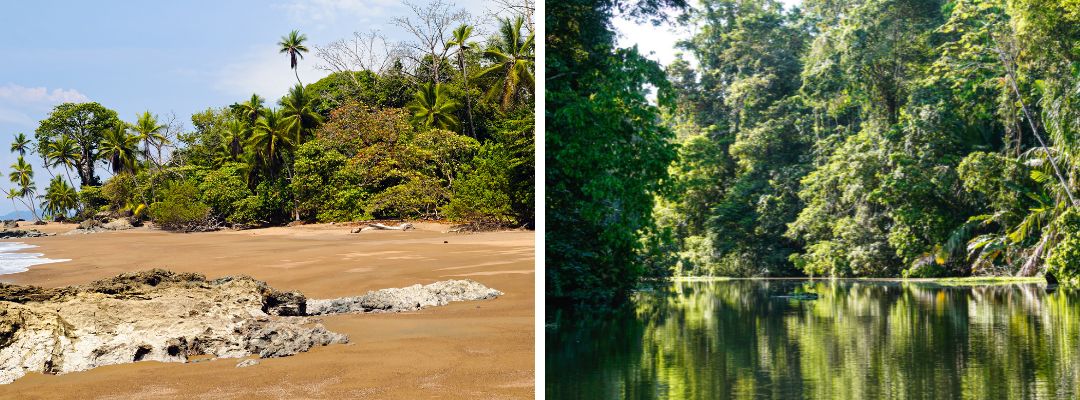
Corcovado or Tortuguero? A hard choice if you don’t have the time to do both. Both are stunning rainforests and offer abundant wildlife. Both are hot and humid, and it really depends on some conditions on you to enjoy more one or the other.
Corcovado or Tortuguero shouldn’t be a question; as for a real nature lover, the decision would be to stay longer and enjoy both.
However, it also happens that you want to see a volcano and spend some time just lying under the sun.
So well! Let\’s choose!
First of all, where are Corcovado and Tortuguero?
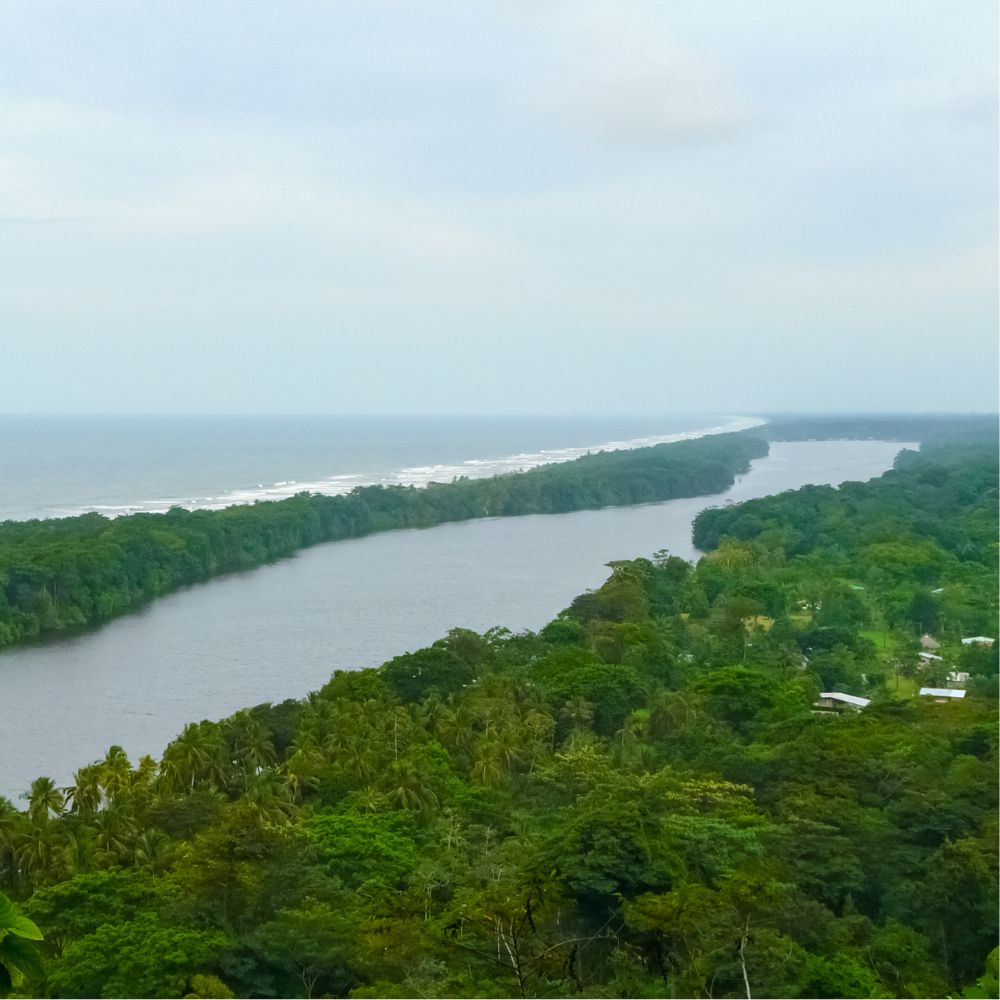
As you will see in the map below, Tortuguero is in the North Caribbean, and Corcovado is almost in its opposite, in the South Pacific.
What do Corcovado and Tortuguero have in common?
Both Tortuguero and Corcovado are known to have certain conditions in common:
They are hot and humid.
They both are low in height above sea level.
In both, we see pretty much the same rainfall.
They have approximately the same biodiversity, and wildlife sightings are very common in both places.
Both are remote and isolated.
Both are luscious and gorgeous.
In both, you may find beautiful and comfortable accommodations.
If flying from San José (SJO), you are 45 minutes away from both.
So! What are the differences between Tortuguero and Corcovado?
The first big difference would be in the driving distance from San José; Tortuguero is closer than Corcovado if you are driving.
However, if you are flying, they are both, more or less, at the same 45-minute distance from San José.
Now the question should be actually:
Where are you coming from to see Corcovado or Tortuguero?
Well!
Tortuguero is closer than Corcovado to Sarapiqui, Turrialba, Cahuita, and Puerto Viejo in the South Caribbean and pretty much at the same distance from Monteverde or any of the Guanacaste regions and beaches.
Corcovado is closer than Tortuguero to Dominical, Manuel Antonio, Perez Zeledon, all of the Central Pacific, and the Nicoya Gulf.
Same distance to Guanacaste regions and to Monteverde.
Tortuguero can be seen from three main areas (see the map below in dark red):
The Jaloba Park Ranger Station, which is at the entrance of the National Park on the South, staying in the region of Parismina to see it.
The Cuatro Esquinas Station, which is closer to Tortuguero Village and the main hotels.
And the Palma Biological Research Station, which is by the Tortuguero Mountain and on the way to the San Juan River.
None of them are accessible by land.
And even by plane, you must have a boat to take you from the airport to the hotels or villages.
Corcovado has two gateways: Carate (getting in by Puerto Jiménez) and Drake Bay.
Puerto Jiménez will get you to the southern part of the National Park, in Carate Beach and La Leona Park Ranger Station. You can also reach the Golfo Dulce and all its richness and fantastic isolated lodges and hotels. (See in the map in light blue.)
And Drake Bay on the North that is reachable by air and by boat (from Sierpe in Palmar Sur). From there you can also get to the Biological Reserve Isla del Caño (Caño Island) and its super diverse marine fauna and flora.
You can reach both Carate and Drake Bay by land, but only on a four-wheel drive.
What are Corcovado and Tortuguero about?
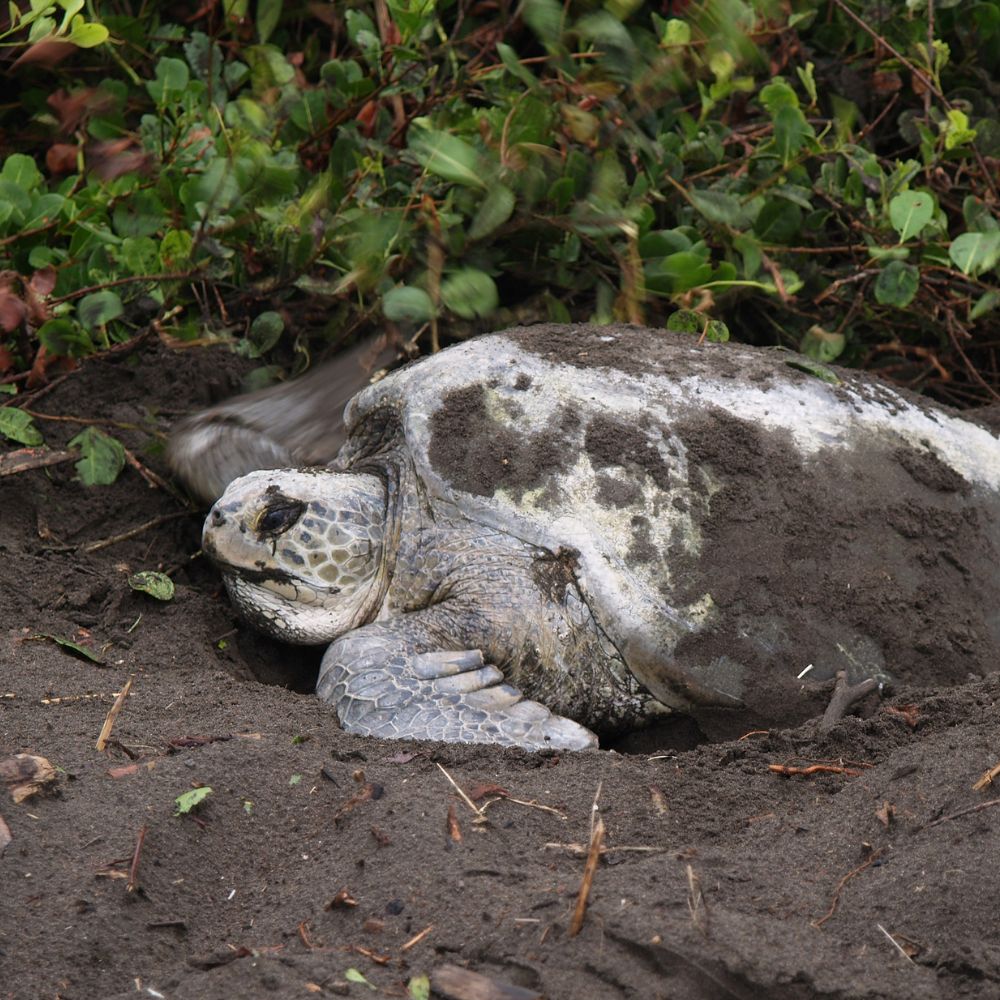
While Tortuguero is about the rainforest and the sea turtles in their season (July to September to see the nesting), Corcovado is about the ocean and the rainforest, making it clear that we are talking about the ocean wildlife and not jet skiing.
In Tortuguero, in the turtle season, for the nights you are there and if you pay the tours, you can witness the amazing turtle nest making and eggs laying. The days will be spent exploring the breathtaking beauty of its rainforests and the wildlife sightings, which are pretty common.
In Corcovado, while in the hotel and in the National Park, you will witness one of the most intense rainforests of the world. The ocean can also provide a lot in terms of wildlife sightings, as this is an area where whale and dolphin sightings are pretty common.
You can snorkel or dive in Isla del Caño (Caño Island), and you can also enjoy in some areas the waves or kayaking in mangrove forests.
So, Corcovado is about rainforests and marine life.
Corcovado National Park boasts intense marine life, making it a unique destination where you can witness whales, dolphins, and a plethora of other species while journeying to one of the most biodiverse places on the planet.
Unlike Tortuguero, which primarily focuses on exploring its canals and observing wildlife from a distinctive vantage point, Corcovado offers an immersive experience in both its rich terrestrial and vibrant marine ecosystems, providing a comprehensive glimpse into Costa Rica’s incredible biodiversity.
Then again, the answer to Corcovado or Tortuguero if you could only choose one lies on…
What else do you want to do in Costa Rica, and how long do you have to do it?
If you have all the time, money can come any time of year, and you are a true nature lover:
Go to both! You will enjoy their similarities and differences very much! Stay in Tortuguero for at least two nights and in Corcovado for at least three nights.
Usual choices that can determine if Corcovado or Tortuguero?
If you have all the money and time to visit but can’t come whenever you like:
The best months to visit Corcovado are from November to April.
The best months to visit Tortuguero are March and April and definitely September and October (sunny, affordable, and empty).
Corcovado or Tortuguero? If you have the time but not as much money and not whenever you want, go to Tortuguero. You will find, in general, Corcovado accommodations and transportation can be more expensive.
Corcovado or Tortuguero? If you want to visit a volcano and cannot do both because of time issues, go to Tortuguero. It’s closer to the very active Turrialba Volcano and the diverse Arenal Volcano Region.
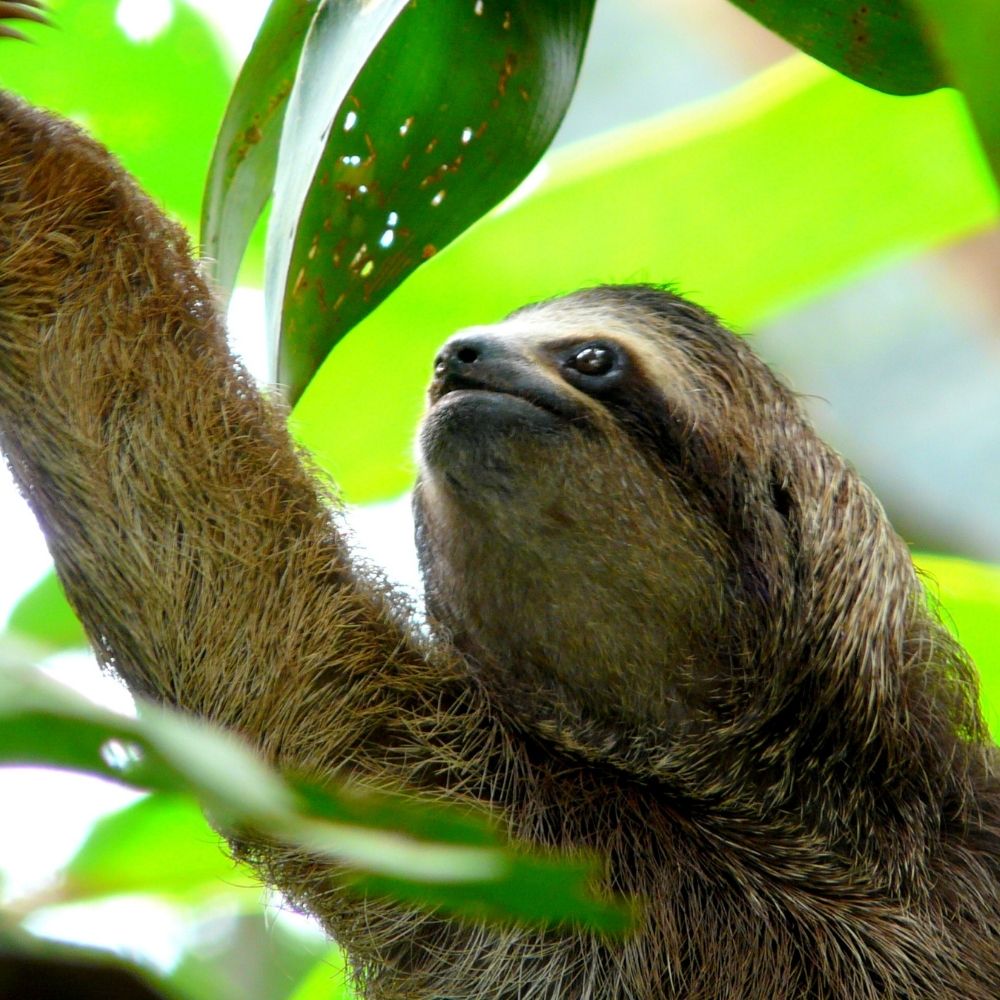
Sloths are abundant in both national parks.
In both places you may see amazing wildlife
Corcovado or Tortuguero? If you want to go for leisure and rest in a nice resort after the rainforest, go to Corcovado. It is closer to Manuel Antonio, where you can find some breathtaking resorts to enjoy the beach.
Corcovado or Tortuguero? If you don’t have all the time in the world but can spare three nights (and not really into a volcano): Go to Corcovado. You will enjoy more diversity of activities as you have one day for the rainforest and another one to go in the ocean in Isla del Caño.
If you like diving or snorkeling, go to Corcovado.
If you come in July, August, or September, Definitely Tortuguero is your place, as you will witness the massive sea turtles nesting.
If you love kayaking on flat water, Tortuguero is your place.
If you cannot live without AC but love nature, Corcovado is your destination.
If luxurious and extremely comfortable accommodations are a must for your vacation, in the Osa Peninsula, you will find more luxury than in Tortuguero.
Now… don’t go to either if you are into only beach, leisure, and rest in a gorgeous hotel. Both destinations are about the jungle.
If you want big beach resorts and volcanoes with rainforest, we would recommend going into Liberia and visiting Guanacaste, its gorgeous beaches, and Arenal or Rincon de la Vieja Volcanoes and National Parks.
But most of all, ask questions! If you have a good local travel agent, ask him or her about these two destinations. If you are planning the trip by yourself or would like to get in contact with an expert to ask some questions, I would be more than happy to help.
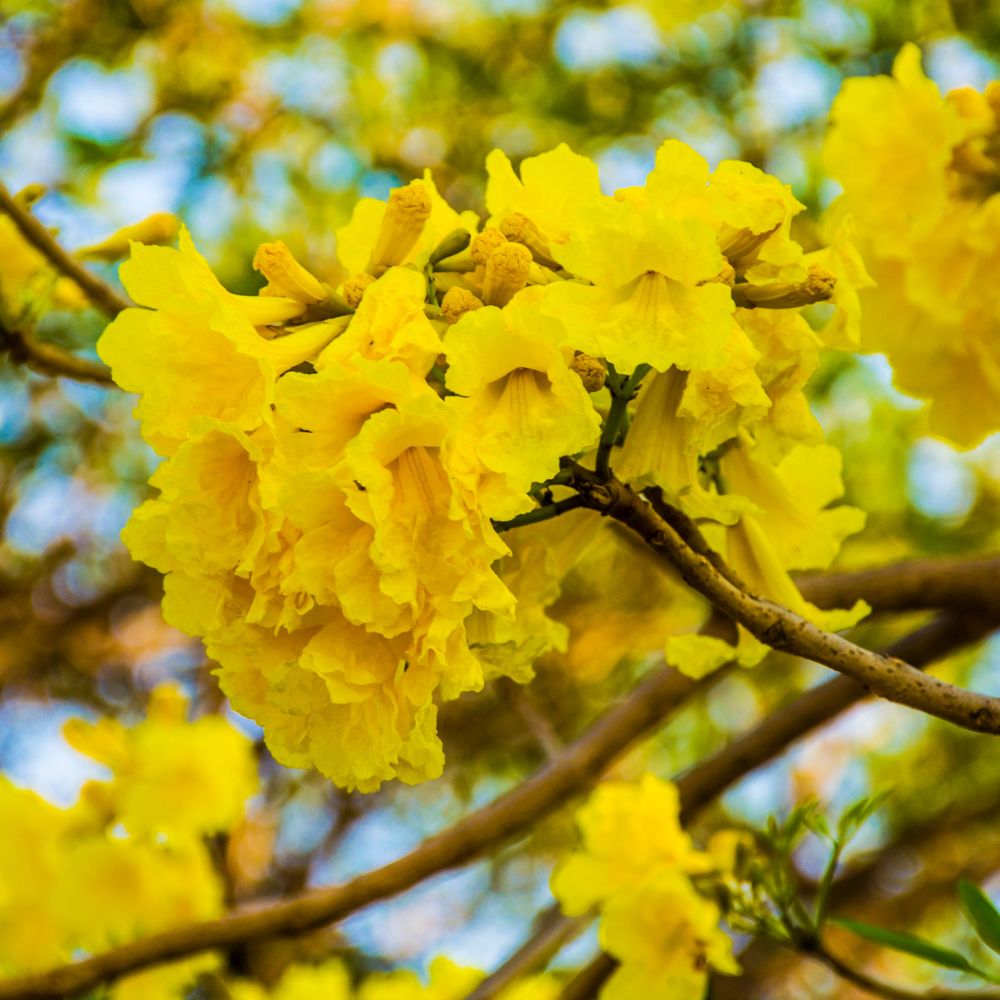
Costa Rica in April is sunny and full of colors. Many trees bloom, and the jacarandas compete with the Pink Puis to turn the Central Valley into a glorious painting. The country boasts its beauty in this month more than in any other!
Yellow Pui Tree in bloom | Costa Rica in April
Anyone who has toured Costa Rica will say that it is worthwhile to visit at any time of year. And, as it has such a variety of microclimates, it all depends on what you like best; except for the extremes, we got it all!
However, April may be the best month to visit our country, as it is simply breathtaking!
Costa Rica in April has perfect weather. It is sunny, a bit breezy, and wonderful in all senses. There may be a couple of rains, but it is only the announcement of the new coming season. In general, it is a great time to come!
It is also the season for bird chicks to get out of their nests and learn to fly. A busy time in the wilderness. And, if you are lucky enough, you may even get the first rains of the season and see life coming back in many areas!
And although the peak tourist season begins when the dry season begins, which also coincides with winter break and New Year’s.
The other peak season also coincides with the end of the beginning of the rainy season. Semana Santa (Easter Week) is the other busiest time of year as Latin Americans, including Costa Ricans, take vacations to travel. And for the US and Canada, it is spring break.
Semana Santa, or Holy Week, is an event that typically occurs in April. It is the week preceding Easter Sunday filled with religious processions and celebrations.
For 2025 the dates of Easter are: Sun, Apr 13, 2025 – Sat, Apr 19, 2025.
So! If your holidays for 2025 are on this week, now you know you better, call your travel designer right now as hotels fill up incredibly fast!
Holy week in Costa Rica| Costa Rica in April
If you’re looking for warm weather and a place with beaches, adventure, and the attractions of a tropical vacation, April in Costa Rica has a lot to offer.
However, it’s vital to be mindful of some things because the high season is in full swing.
Let’s talk about seasons in Costa Rica:
We don’t have seasons as the temperature doesn’t change much, as you may already know. Mainly, the changes apply to if it is raining or not.
April is one of the months when the whole country is in a sunny period. And although it will vary from one place to the next according to region, height above sea level, wind, and other variables, April is a very friendly month to come to Costa Rica.
Keep in mind that the temperature in the tropics is uncertain, so there might be some cooler or rainy days in April. But it would be as weird as all changes we are getting these days.
Nevertheless, it also is the hottest month of the year, with temperatures regularly reaching the mid-’90s. Fortunately, Costa Rica’s coasts are a wonderfully refreshing antidote to the interior’s steamy heat.
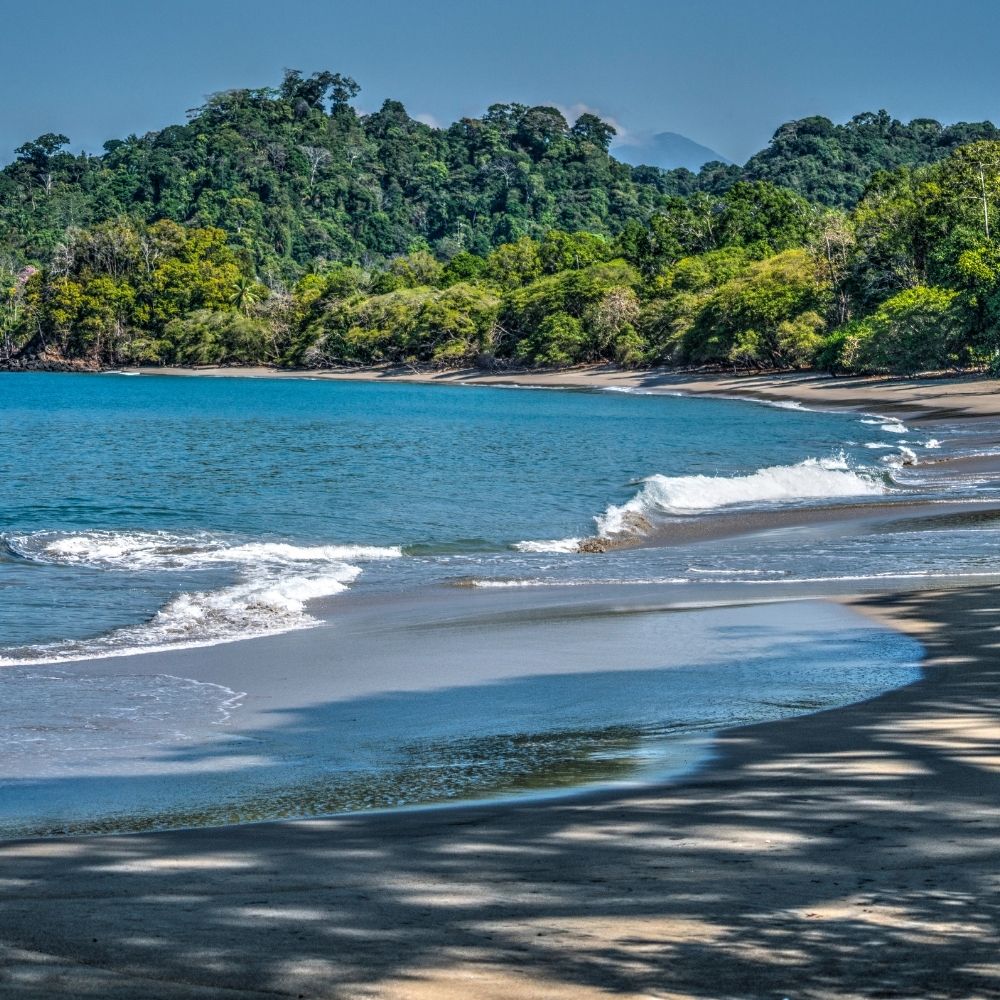
Manuel Antonio National Park | April in Costa Rica
Of course, it is essential to realize that because of its geographical location and the many mountains there are over 5000 feet above sea level, you will find that except for the coastal regions and the northern lowlands, almost all of Costa Rica has delightful weather with an average temperature of 71°F (22°C).
Let’s look at some additional elements of April in Costa Rica:
Agriculture:
In April, mangos are beginning to appear in the trees. They can be eaten with salt and lemon; it’s a treat!
Strawberries, cantaloupes, guavas, watermelons, rambutan, and tamarind are in season, as are star and passion fruits.
It is the end of the sugar cane season; some heavy and bulky sugar cane loaded trucks may be on some North and Pacific roads.
Trees are in bloom! Jacarandas, Pink Puis, Yellow Cortes, Royal Poinsettia, and African Tulips. Star Fruits and passion fruits are in season.
You may find other fruits in the fruit stands on the road and in supermarkets, cantaloupes, watermelons, guavas, strawberries, rambutan, and tamarind.
Wildlife sightings in Costa Rica in April:
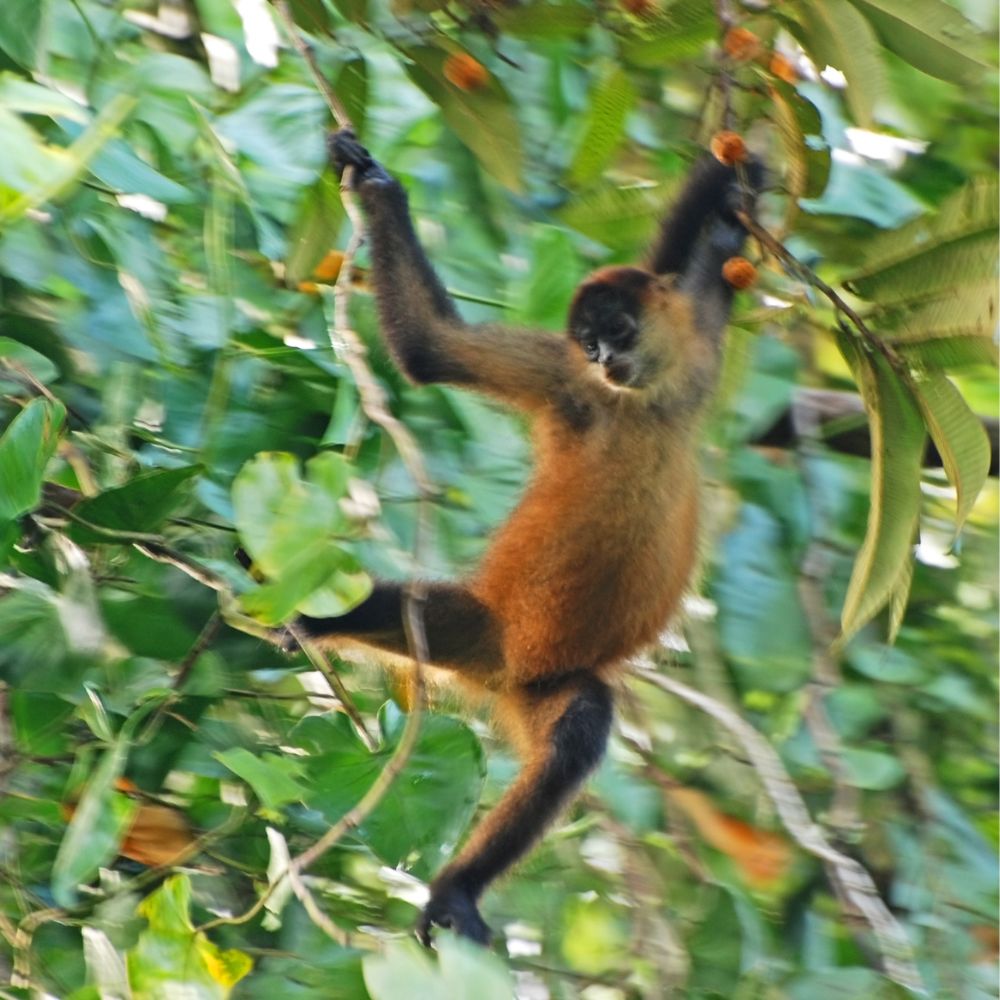
Obviously Costa Rican nature does not operate as a zoo; sightings are based mainly on chance. However, many animals in Costa Rica can be seen all year, including sloths, monkeys, coatimundis, and over 600 species, including 50 types of hummingbirds and six types of toucans.
It is important to note that Costa Rica accounts for over 900 species of birds; however, migratory birds are already flying back home in April.
Turtles
Turtles come to Costa Rica by the millions, literally speaking.
However, and unfortunately, April is not the best time to spot them. If you are fortunate, you may see one of the enormous leatherback sea turtles, the biggest in the world, on the Caribbean coast.
Either in Tortuguero or Gandoca, in the south. However, these are sporadic sightings.
On the Pacific Coast you may be lucky enough to witness an arribada in Ostional Beach, or similar. It is a random phenomenon, and you may have to cancel previous plans to go see it, but it is worth it!
Dolphins
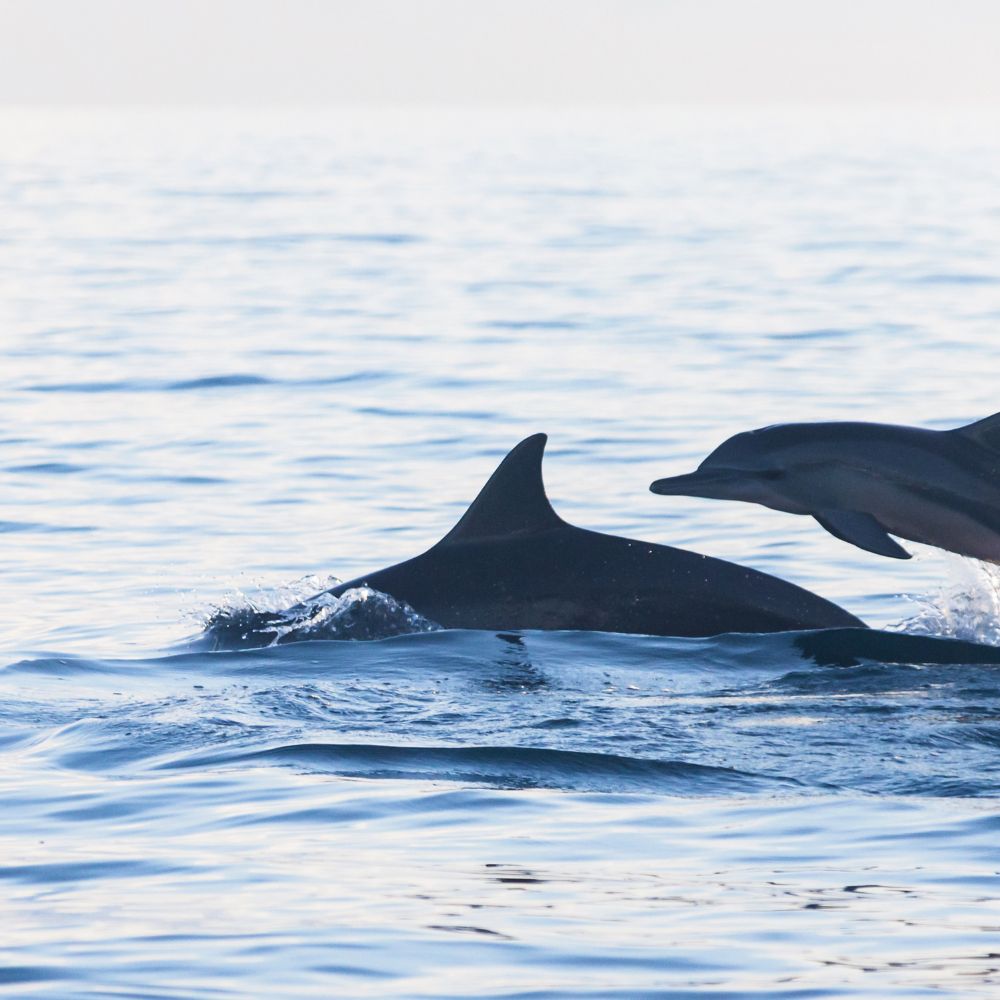
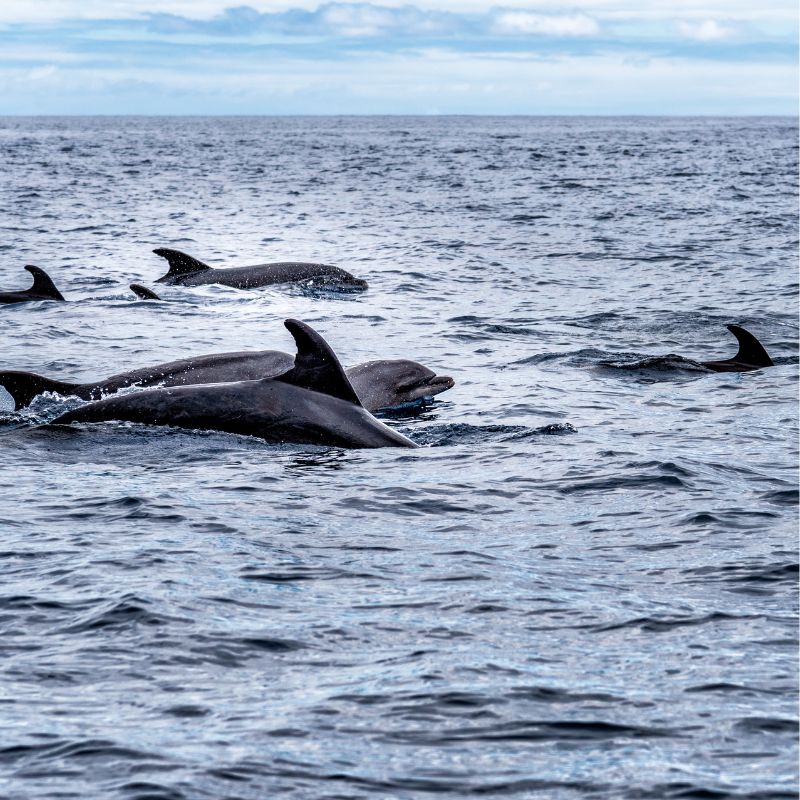
You can see them all year long. Several species, including bottlenose and spotted dolphins, can be seen throughout the year, so you have a good chance of seeing them.
Depending on where you are staying, there are several catamarans and sailing boats, so the chance to see big schools of dolphins are high. Ask your travel designer about the best places to see dolphins.
The best places to go dolphin watching in Costa Rica:
Tamarindo and surroundings.
Drake Bay
Tambor
Golfo Dulce
Golfo de Nicoya
Dominical (Parque Marino Ballena)
Caribbean: Limon and South Caribbean
*Some lucky people have seen dolphins in the Tortuguero Canals
Whales
Costa Rica is the winter place for the Southern Hemisphere Humpback Whales, and so, April is not a good time to see them. (Their winter is July, August, September).
However, you may be quite lucky and spot some of the California Whales that come to Central America looking for warmer waters. Not usual in April, though.
Birdwatching in April in Costa Rica
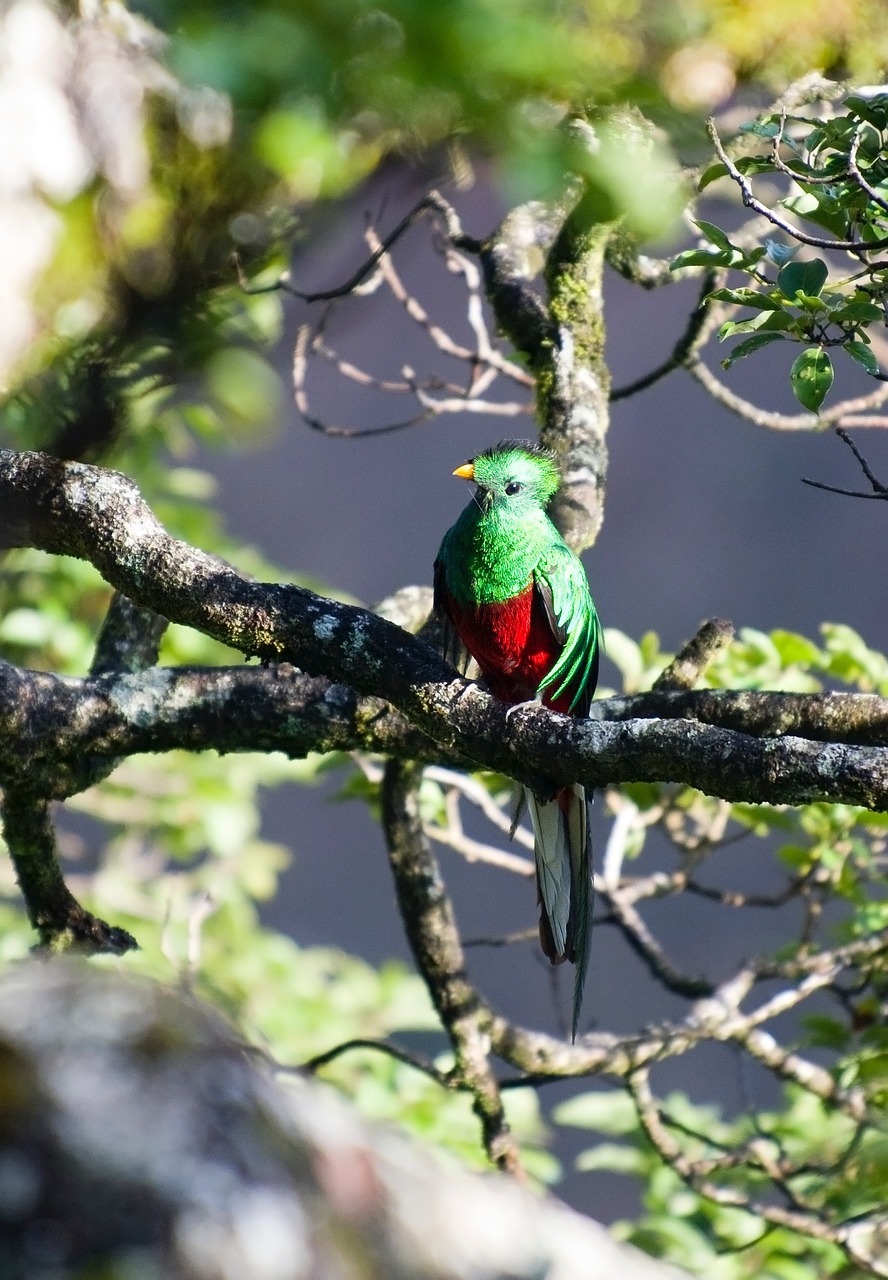
Resplendent Quetzal
In April, Monteverde and Savegre and other high regions of the mountain ranges will be visible. It is the moment of the year when species are mating and looking for eggs and young. The mating dances and songs are in full swing, and the feathers and noises can be spectacular.
Resplendent Quetzal | April in Costa Rica | Photo by Nicman
Species that migrate
The 252 migratory bird species are already flying back North, and our forests seem to miss some of the many mixed flock members that are noticeable in the sunny season.
Usual Costa Rican Birds
It’s a great time to go bird watching because March is nesting season, and April is juvenile. They emerge from their nests and can be seen flying for the first time in various locations, using their brand-new wings.
The remaining bird species can be seen all year.
Toucans
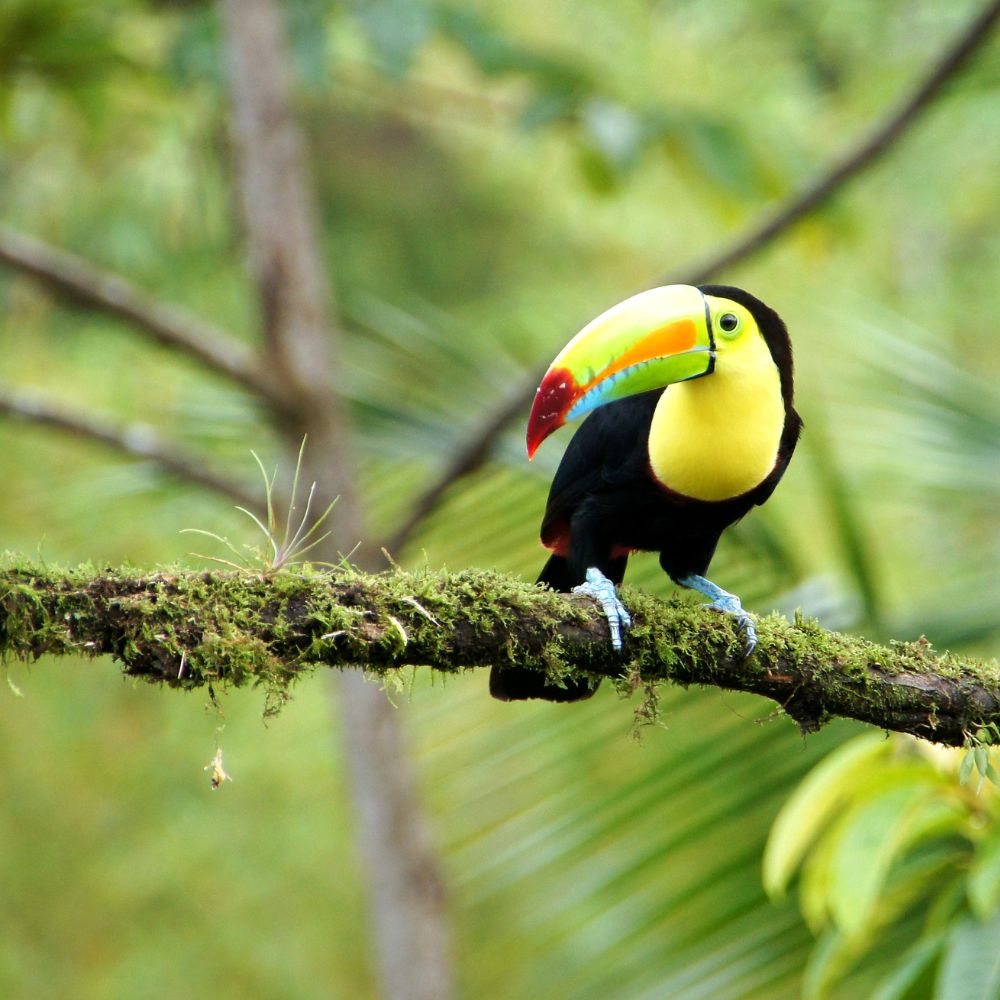
Costa Rica is habitat to six different toucan species. Keel-billed toucans, as well as Black and Keel Mandibuled Mandibuled Mandibuled Mandibuled Mandibuled Mandibuled Mandibuled Mandibuled Mandibuled The Emerald Toucanet can be found in high elevations like Monteverde.
Keel Billed Toucan | April in Costa Rica
The golden-eared Eared Toucanet is hard to spot. They are visible all year. The black-mandibled toucan and the keel-billed toucan are relatively common sightings along the Caribbean Coast and in the northern area. They can also be seen in mountain areas such as Monteverde and Turrialba. Collared Aracaris can be seen in these lowlands, despite not being found in the highest elevations.
Costa Rica’s Central and South Pacific are home to fiery-billed Aracaris. Yellow-eared toucans and Emerald Toucanets can be found in the mountains of Guanacaste, near the Caribbean and Monteverde.
Costa Rica in April – The Travel Industry
Due to the conservation of National Parks and reserves and the pandemic, the number of persons permitted to visit some of these locations can be pretty limited.
And if you are driving, it is important for you to know that there are already many National Parks that are not selling their entrance tickets on-site, but online, so it’s a good idea to keep this information in mind and discuss it with your travel designer.
Cruises
Cruise ships travel to Costa Rica in April. This is important to know if you intend to visit the Crocodile Safari in Tarcoles River, Carara National Park, the Pacific Aerial Tram, Monteverde Reserve in the Monteverde area, or Hanging Bridges, Coffee Tour.
Many people will also be in Monteverde, Arenal, Tamarindo, and Manuel Antonio. Tour operators and tour companies are ready for this, and it’s all well structured in general.
And in the area of the Caribbean, some of the adventure sites like ziplines, tubing, or kayaking may be crowded on cruise days.
Surfing:
From January to April, chilly winter fronts press into the Caribbean every now and then creating the enormous and continuous waves.
To enjoy the benefits of the waves in Costa Rica in April, Salsa Brava is at its peak in Puerto Viejo, in the South Caribbean.
Surfing in April in Costa Rica
To wrap it up:
If you want to get away, coming to Costa Rica in April is a beautiful idea because it will offer some warm sunny rays and allow you to relax in the exotic destinations that the country provides. And although it is high season, it is not considered peak season (Except for the Eater week).
Places will have a constant flow of people on the trails and the beach and the hotels and lodges, but the weather is breathtakingly beautiful.
If you are traveling to Costa Rica April, especially before or during Easter Week, reserve your hotel, or place to stay as of now, whenever you are reading this. It’s urgent!
And if you can move it for after Easter, you will see the best of Costa Rica, pristine and empty.
Keep on reading to find when is the best time to come to Costa Rica!
The best trails in Monteverde go through some of the most amazing wilderness you will ever hike on. The most well-known is the Nuboso Trail, the Camino is the easiest and the Roble and Chomogo are the most strenuous. They are all worth the time and walk as they go through breathtaking cloud forests.
Discover the best beaches in Costa Rica’s North Pacific: Tamarindo, Conchal, Flamingo, and Potrero. Close to Guanacaste Airport (LIR), these stunning beaches offer pristine waters, soft sands, excellent accommodations, and diverse activities. Ideal for surfing, relaxation, and wildlife. Visit year-round!
Watching whales in Costa Rica is relatively easy if you are at the right time and in the right place, of course. However, do you know when that is? Costa Rica has not only two oceans but different regions that work as different habitats for different species. Let us tell you a bit about where to find them and at what time of year.
Costa Rica Whale Watching
To see whales in Costa Rica is entirely possible, as this area is the gathering place for humpbacks from both hemispheres. As they play an essential role in the tourism industry in a few country regions, many tours will give you this fantastic experience during the nine months when whales are around our coastlines.
With shorelines on the Caribbean Sea and the Pacific Ocean, Costa Rica has more maritime territory with 221,902 Mi2 (574,725 Km2) than terrestrial space, which is merely 19,729 Mi2 (51,100 Km2).
The Pacific Coast is marked by numerous gulfs, peninsulas, small isles, islands, and points. In comparison, the east coast is completely uniform except for the southern areas, where you find Puerto Viejo, Cahuita, and Manzanillo.
These irregularities on our Pacific shore are perfect for the whales to be seen. Their waters are calmer, and it is easier to spot them on the Pacific coast.
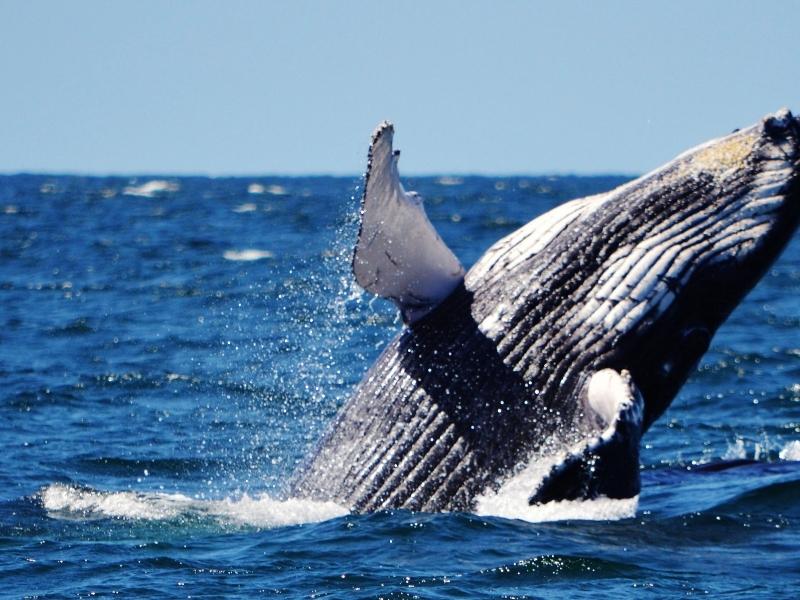
The most visible of all whales worldwide is the magnificent Humpback Whale, as they remain mostly all the time closer to the surface.
In Costa Rica, we have pseudo orcas, pilot whales, and others that have been seen close to our coast. However, the acrobat of the ocean is the humpback whale.
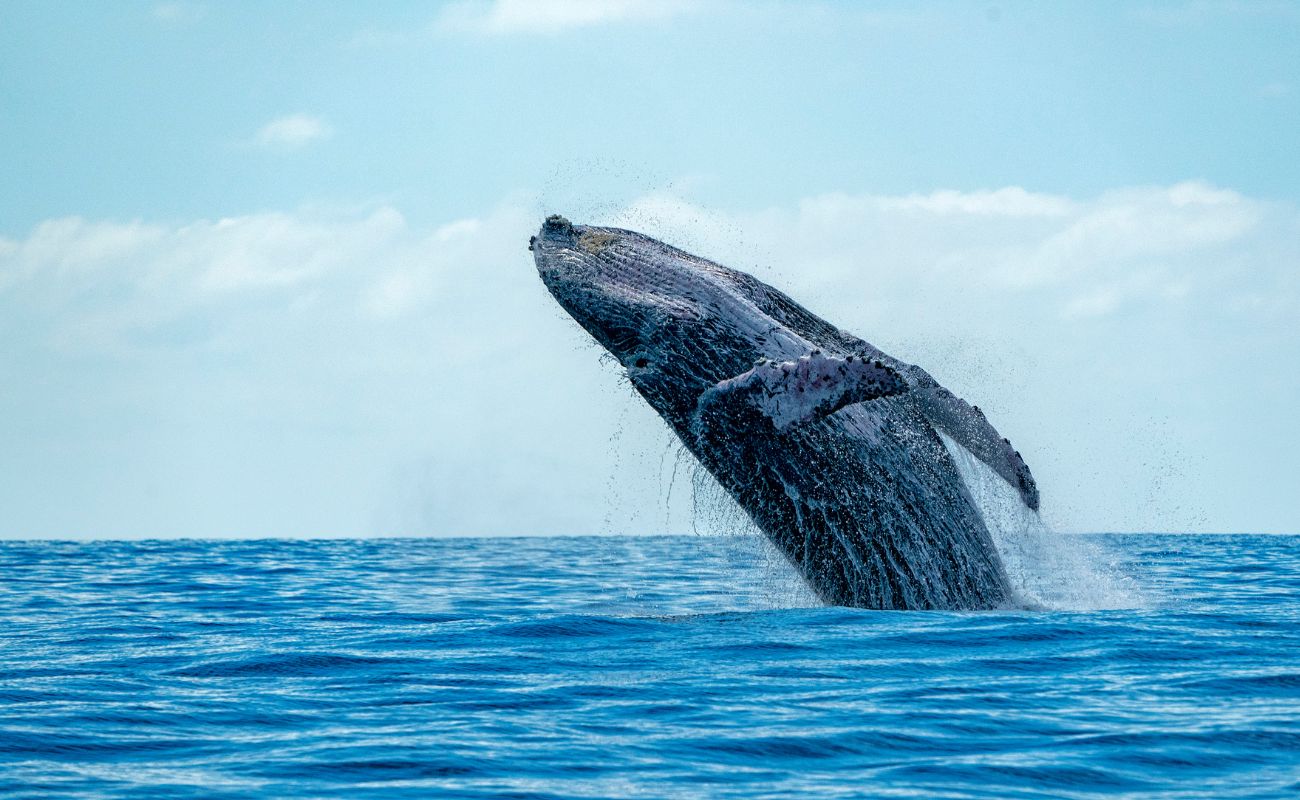
They jump, float, come near, and play, and if your time in Costa Rica is correct and you are lucky, you may see them bounce and dance near the surface.
Let’s talk about watching whales in Costa Rica, and their impressive migration.
Costa Rica Whale Watching
The North Pacific Humpback Whales have the most extended migration path of any animal on the planet. 5,160 miles (8,300 km). They move from the icy North Pole waters, where they get fed, to the much warmer tropical and subtropical ocean waters that range from northern California to Central America.
The southern hemisphere population is more significant, with around 6,000 whales. They cover thousands of miles from Antarctica to the more heated seas of Central America.
These yearly trips are well known and tracked. However, the reasons behind the places that host the whales during their winters are still unknown.
Some of the most common hypotheses around this are:
A remaining behavior from when the ocean basins were smaller and feeding and wintering regions were closer.
The maximization of energy resources by spending winter in warmer waters.
Growth and possible chances of survival of calves (offspring) increase in warm, protected waters.
Escape of killer whales (Orcinus orca) depredation at tropical latitudes.
The fact is that they breed and sometimes give birth in these areas, and usually, when you spot them in Costa Rica, you will watch a calf accompanying the massive mammal.
When they arrive in Costa Rica, they will get together and use their time in the tropics to find suitable coupling mates, give birth, and allow the newborns to grow stronger and wiser for the trip back to the cold waters where they feed.
Costa Rica Whale Watching
The warm waters are considered excellent for the development of baby whales, even if they are already 4-5 m long (13–16 feet) and can scale up to 1 ton (907 kg) when they are born. Many predators will be after it because, as big as it may seem, it is immature and playful and, at times, can get out of its mother’s immediate sight.
Mother and calf surface to breathe together.
Now, in Costa Rica
There are two separate humpback whale migrations, and they happen at varying times of year but never overlap, as seemingly they are escaping from the coldest months of their feeding areas.
· Southern humpback whales start to show up in late July and remain until early November.
· Northern humpbacks ordinarily begin to come to Costa Rica in December and may be viewed until late March or early April.
And of course, this is unique, as there is a chance to see whales nine out of twelve months of the year.
They don’t bring the same number of individuals, so please keep reading to get the most information from this post.
Costa Rica Whale Watching
Fast Facts about the whales that come to the coasts of Costa Rica
The South Pole migration has the most significant number of whales, and the peak season is from August to October. Through this time of year, your probabilities of observing humpback whales are pretty good.
The majority of the Alaska and California whales spend their winter in Hawaii, Japan, and other places to the north, so there are fewer in Costa Rica. Thus, it is harder to watch humpbacks from December to April, but not wholly impossible.
Whales are occasionally detected on catamaran, kayaking, and snorkeling tours, especially from late December to the beginning of February. Still, there is more chance to see sea turtles, sea birds, and dolphins at this time of year.
April to mid-July are the months when, most likely, you won’t see whales at all on our coasts.
Humpbacks from the northern Atlantic Ocean also move close to Costa Rica (Caribbean Coast) but are not seen significantly, so whale watching isn’t as successful as on the Pacific side.
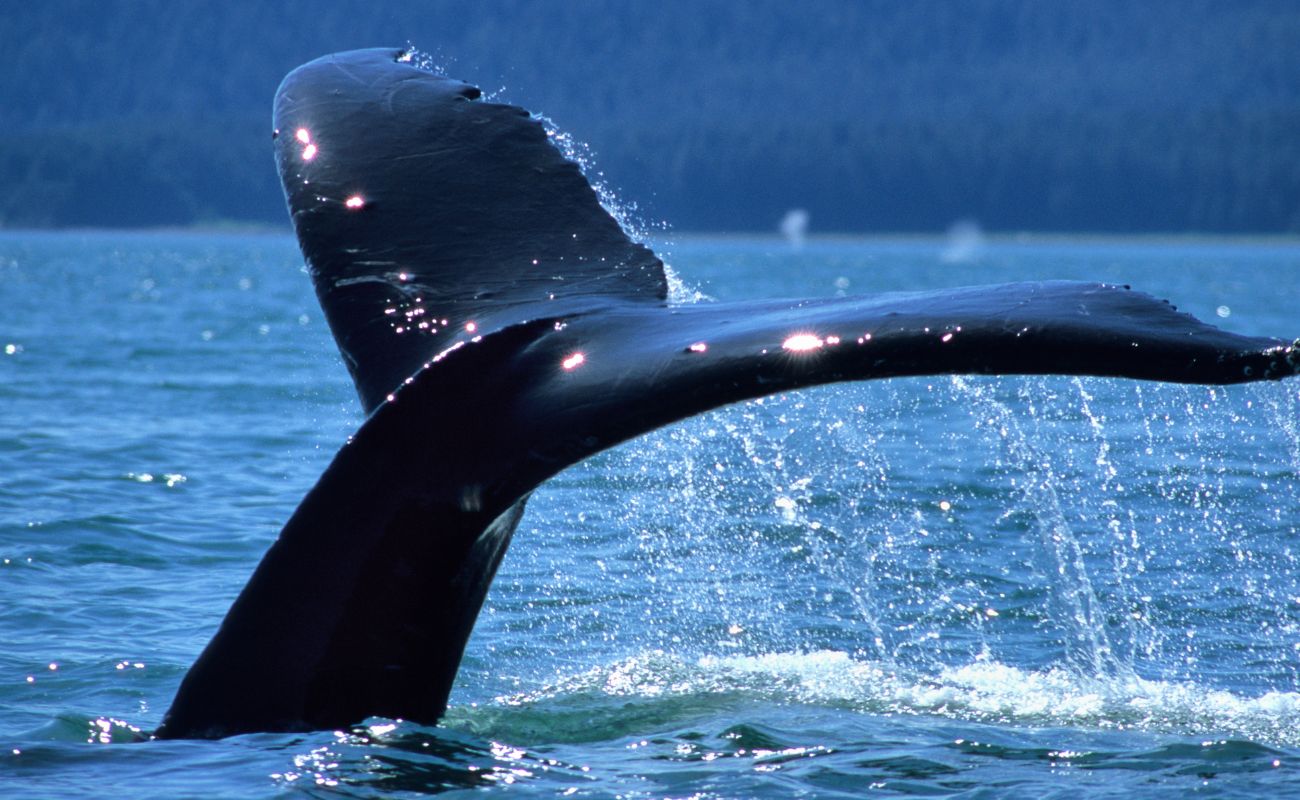
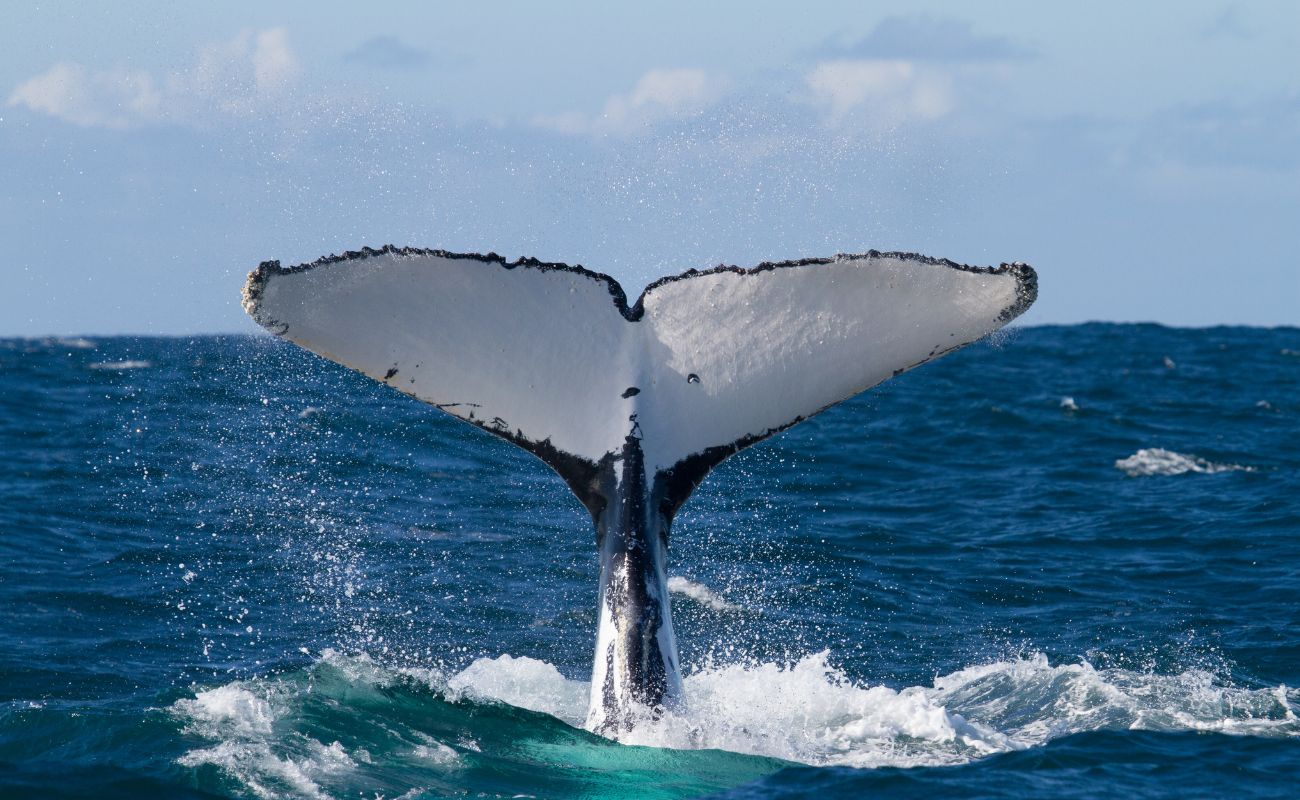
Humpbacks make magnificent displays with their tails and huge fins when they jump out of the water. Be ready for it!
Males fight for females by singing songs, producing complex bubble performances, and bodily repelling one another.
A baby comes 11 months after coupling, and calves linger by their mother’s side for up to a year. They are very affectionate with each other, and the mother can sometimes be jealous of the environment as predators will try to hunt the babies.
Where to watch, what?
Approximately 25 species of whales, dolphins, and manatees have been seen on our coastlines, with different species from coast to coast.
Osa Peninsula, Golfo Dulce, Drake Bay, and Isla del Caño.
These maritime mammals come in all sorts of groups, from lonely female whales to the super schools of dolphins around the Osa Peninsula.
What You Can See:
Humpback Whales
Bottlenose Dolphins,
Pseudo Orca Whales
Pilot Whales
Spinner Dolphins
Spotted Dolphins
Common Dolphins
Rough-Toothed Dolphins
When: The primary season to watch whales goes from late July to early October.
The whales you see in this region come from the Southern Hemisphere, although some Northern Humpbacks show off from late December to February.
Experiences:
The best idea is to take the tours from Drake Bay to Caño Island, as the water between the bay and the island is usually populated with pods of dolphins and whales.
Costa Rica Whale Watching
Marino Ballena National Park (Central-South Pacific)
What You Can See:
Humpback Whales
Pseudo-Orca Whales
Pilot Whales
Spinner Dolphins
Spotted Dolphins
Common Dolphins
Bottlenose Dolphins
When: The migratory humpback whales can be found in the area from late July to October and late December to early March.
The Experiences: Marino Ballena National Park strictly monitors all whale watching in the region to guarantee that the tours are safe and enjoyable yet sustainable, respecting a logical distance not to disturb the cetaceans.
Trips leave the national park every day, traveling out to observe the fantastic park’s whale tail land formation and then going to the usual places where these marine mammals hang around.
Humpback whales are recognized to be especially active in this area, sometimes in larger groups.
Costa Rica Whale Watching
South Caribbean Coast
What You Can See:
Humpback whales (very rare)
Bottlenose Dolphins
When: To watch dolphins, you can go offshore any time of year. The humpback whales that rarely show off in this area come from the north, talking from late December to February.
The Experiences:
The Caribbean coast has an outstanding bottlenose dolphin group that is easily spotted when you go snorkeling.
Although it is not part of Costa Rica, an area to almost guarantee dolphins’ sightings is the Archipelago of Bocas del Toro, where there is even a spot called Dolphin’s Bay.
Tortuguero Canals (North Caribbean)
It is a rare sighting, but dolphins can be seen in the Tortuguero River, closer to its exit to the sea.
They follow the boats that go to the airport at times.
What to see:
Bottlenosed Dolphins
Guanacaste (North Pacific Coast)
What You Can See:
Humpback Whales
Pilot Whales
False Orcas
Orcas (rare)
Spinner Dolphins
Bottlenose Dolphins
Common Dolphins
When: At least three species of dolphin can be located during the year.
The most suitable time to see whales and dolphins is from late July to October and late December to late March.
Experiences:
There are plenty of chances to see them on the catamaran sunset sailing tours, on snorkeling trips, and even, if lucky, on a kayak or paddleboard, as they move pretty slowly in these regions.
Costa Rica Dolphin Watching
Planning your trip to Costa Rica to see the marine wildlife as well?
To conclude this guideline to watch whales in Costa Rica, if that is your main interest, the best time is about to get here, in September!
If you want to see whales, dolphins and other natural wonders in Costa Rica, send me a note with your questions to writer@olgasaenz.com maybe I’ll be able to give a couple answers 😉
Manuel Antonio National Park and its surrounding region are one of Costa Rica\’s most comprehensive tourist destinations. It boasts beautiful beaches, a vibrant rainforest, plenty of wildlife sightings, and a superb selection of lodgings, activities, restaurants, and other experiences for any traveler.
Monteverde is home to some of the most stunning cloud forest reserves in the world. From the Curicancha Reserve to the Monteverde Cloud Forest Reserve, each offers unique trails teeming with diverse wildlife and breathtaking views. These reserves are designed for exploration, allowing you to wander at your own pace and truly connect with nature. Whether you’re an experienced hiker or a first-timer, walking alone in this magical environment will leave you with unforgettable memories and a newfound appreciation for solitude
Uber en Costa Rica es bastante fuerte y una alternativa confiable para el transporte. Por supuesto, tiene sus pros y contras, pero sobre todo, ha hecho las cosas más fáciles para los viajeros.
Uber en Costa Rica podría ser la mejor alternativa de transporte en el país para distancias pequeñas. Y exactamente como en otros países del mundo, hay algunos consejos locales sobre los que escribir.
Uber llegó formalmente a Costa Rica en 2015, y aunque su situación legal es un poco confusa, se ha convertido en una opción de transporte más para los locales y los viajeros. Y acá nosotros le daremos todos nuestros secretos con respecto a Uber en Costa Rica.
La única otra alternativa en este momento en Costa Rica con respecto a las aplicaciones es Didi.
La situación legal de Uber en Costa Rica
La división gubernamental de transporte público sigue intentando decidir la situación de Uber en su totalidad desde su inicio en 2015.
Y a pesar de todos los esfuerzos y protestas de los taxistas, Uber y ahora Didi son fuertes y prósperos.
Por supuesto, hay otras alternativas de transporte en Costa Rica, y tocaremos brevemente el tema; sin embargo, Uber en Costa Rica es una excelente oportunidad para que los visitantes vayan sin problemas y de una manera asequible.
¿Qué pasa con los taxis en Costa Rica?
Foto por Olga Sáenz
Lamentablemente, los taxistas en Costa Rica (como en otras zonas del mundo) tienen la reputación de cobrar demasiado a los turistas, crear rutas más largas, alterar el taxímetro y ser agresivos.
En Costa Rica verás taxis dondequiera que vayas.
Normalmente en fila cerca de las plazas, estaciones de autobuses, hospitales y supermercados.
En las ciudades y pueblos, son coches convencionales. Fuera de las ciudades principales, verás que los vehículos usados como taxis son de tracción a las cuatro ruedas.
El estado los controla, y deben tener un medidor visible (los llamamos Marías) por ley. No pueden dar precios al azar, ni negociar.
Todos ellos tienen triángulos amarillos en sus techos y puertas (con su número de matrícula en ellos).
En los grandes hoteles, se encuentran taxis que trabajan exclusivamente para los hoteles, y pueden tratar de ir por precios fijos a rutas turísticas específicas. Es imprescindible pedir el taxímetro.
Esto es muy importante tenerlo en cuenta porque hay muchas áreas en Costa Rica donde todavía no hay Uber.
¿Dónde está Uber en Costa Rica?
En el mapa de abajo encontrará tres tipos de iconos, los coches azules, los coches verdes y la X.
La X son los lugares donde no encontrarás a Uber en absoluto. Los coches verdes son los lugares donde puedes encontrar algunos coches (especialmente en los fines de semana) Los coches azules son las áreas donde Uber es bastante fuerte.
(Estos datos son de personas que viven y trabajan en estas regiones)
Aunque puede haber algunos conductores de Uber en algunos de estos destinos, no se recomienda depender totalmente de Uber para tu transporte (Fuera de la ciudad capital) y como tu ÚNICO método para moverte por Costa Rica. Sin embargo, en caso de duda, comprueba la aplicación. ¡Puede que te sorprenda!
¿Cuál es el costo de Uber en Costa Rica?
No importa donde estés, puedes comprobar las tarifas de Uber en Costa Rica.
En este momento, es más barato que los taxis. Sin embargo, esto puede cambiar ya que pueden empezar a pagar los mismos impuestos que los taxis.
¿Puedes usar Uber en los aeropuertos de Liberia o San José?
En Liberia, Uber no es tan fuerte, por lo que puedes comprobar la aplicación. Sin embargo, le recomendamos que organices su transporte de antemano.
Y si, Uber es una excelente alternativa al Aeropuerto Internacional SJO Juan Santamaría.
Recogida en el Aeropuerto Internacional Juan Santamaría (SJO)
Cuando hayas aterrizado en el aeropuerto de San José, completado la inmigración y la aduana, comprueba si te funciona el “roaming” o compra una tarjeta sim en la zona de recogida de equipajes del aeropuerto para que puedas llamar al coche al salir de la zona de llegadas.
En el aeropuerto de SJO, hay WIFI gratis; sin embargo, el alcance te puede fallar al salir de las instalaciones.
Cuando salgas de la zona de llegadas, ignora a los agresivos taxistas y la multitud que te espera y cruza la calle subiendo hasta el segundo piso y la zona de salidas y llame a su coche desde allí:
Habrá menos gente, menos coches, y su uber puede esperar un poco más si es necesario.
El aeropuerto Juan Santamaría no tiene un área asignada para compartir viajes.
Su conductor puede pedirte que te sientes al frente para disimular un poco que es un Uber y, de esa manera, no tener problemas con los taxistas de la zona.
También puedes usarlo para los vuelos locales y en la terminal remota.
Salidas:
Puede hacer que un Uber lo recoja en su hotel y lo deje en la zona de salidas sin problemas.
¿Qué necesitas para usar Uber en Costa Rica?
Internet, una cuenta registrada y un método de pago válido y activo.
Es imprescindible comprobar que la tarjeta que utiliza para Uber está permitida para ser manejada fuera de su país.
También puede programar sus viajes, y en Costa Rica, los choferes son bastante puntuales.
Si no tienes una cuenta Uber, es una buena idea abrirla en casa para que puedas usarla cuando llegues a Costa Rica.
Seleccione un punto de referencia cercano para su destino.
Las direcciones en Costa Rica son un poco peculiares. No usamos números de calles sino un sistema local de lugares icónicos: la plaza central, la catedral, la tienda de comestibles Don Paco, un árbol desaparecido hace tiempo (Pero todo el mundo sabe dónde estaba).
Así que si no te quedas en un hotel, sino en un apartamento o en un Airbnb, nuestro consejo es que busques el punto de referencia más cercano y hagas todo desde allí.
Y hazlo en casa antes de tu viaje.
Waze es la aplicación más popular en Costa Rica, así que cuando subas al coche, dile al conductor el punto de referencia conocido más cercano a tu alojamiento.
Hablando de tu partida, hay Ubers en todo momento.
Si estás en el Valle Central y tienes que estar en el aeropuerto a las 2 am, encontrarás un Uber.
Sin embargo, en áreas distantes como La Fortuna, Manuel Antonio, o en la provincia de Guanacaste, incluyendo Liberia, no recomendamos confiar en el Uber tarde en la noche o muy temprano.
Aumento de precios durante la hora pico
El aumento de los precios es irritante, y por desgracia, también lo es en Costa Rica. San José, infame por los horribles atascos, conductores ansiosos y baches largamente ignorados, es una locura a ciertas horas del día y los aumentos de precios ocurren a menudo.
La hora punta va desde las 6: 30 a.m. (a veces más temprano), hasta las 9:30 a.m. y desde las 4 p.m. hasta las 7 p.m. a veces más.
A menos que vayas de tour y tu Uber te va a llevar a un punto de encuentro, o vayas al aeropuerto sea por un vuelo local o internacional, nuestro consejo es que te lo tomes con calma y uses tus relajantes poderes vacacionales para no salir en hora pico.
Algunos detalles importantes a conocer:
Los tiempos de espera no siempre serán precisos. Más o menos 10 minutos.
No es necesario dar propina. Puede que quieras dar una propina a tu conductor, ya sea en efectivo o en la aplicación. También tienes esa opción.
Recuerda que Costa Rica es, en general pequeño, por lo que puedes hablar con tu chofer y ponerte de acuerdo con él/ella para que te pase a recoger de vuelta o similares.
Conclusión
Uber es una gran herramienta para cualquier viajero en cualquie
r lugar del planeta. Ya sea si usted está disfrutando de unas vacaciones de ocio personalizado o mochilero en Costa Rica esta información demuestra ser útil.
Habiendo dicho todo esto, nuestra mejor recomendación sin embargo es hacer tu visita con un guía certificado, para que aprendas sobre tu ruta y estar apoyado en todo momento durante su viaje.
¡Es mucho mejor que Uber! ¡Sólo avísanos y te conseguimos el mejor guía y el mejor transporte!