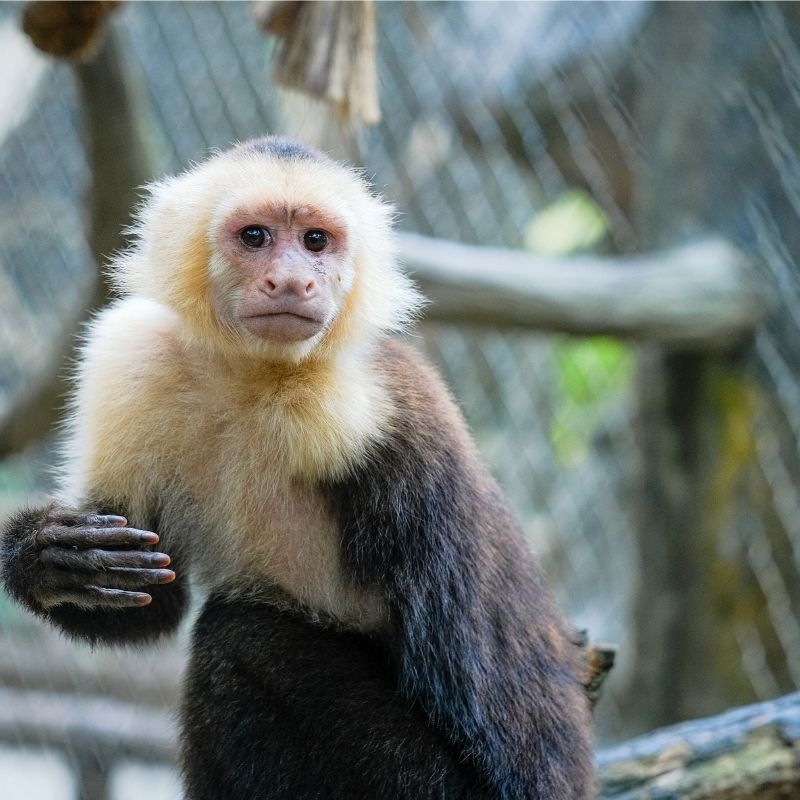
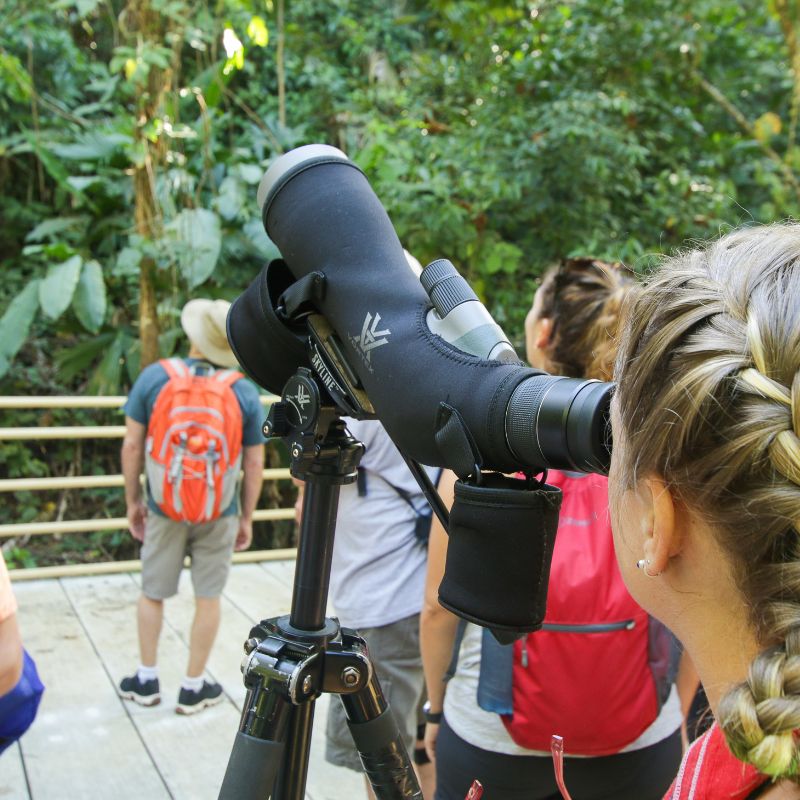
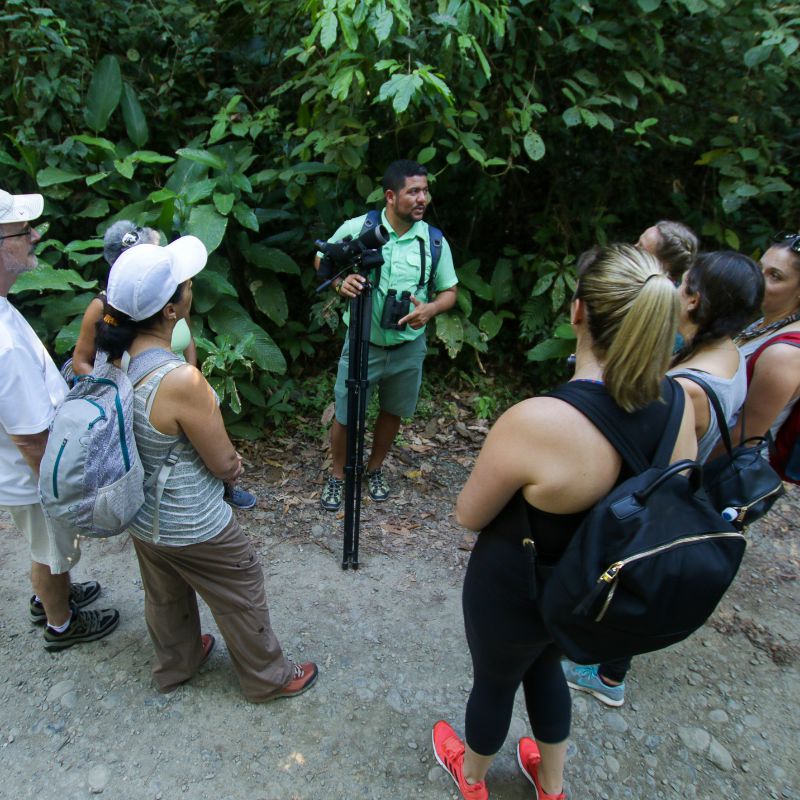
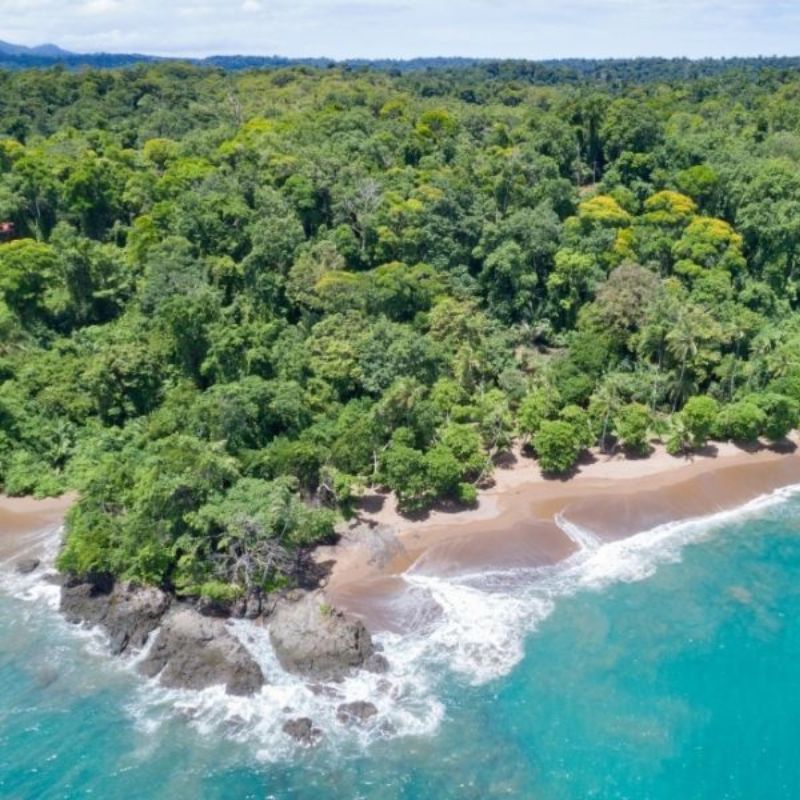
Corcovado National Park in Costa Rica is among the world’s most magnificent, diversified, and inaccessible jungles. It is the perfect excursion for any serious nature enthusiast. Whether you join us on our trip from Manuel Antonio or go on your own, we want to provide you with all of the local knowledge you need to experience this mysterious national park.
I do content writing for web; I don’t get to be a writer, actually. I could say that I am a copywriter. So, from this tiny window, criticizing a serious writer seems blasphemous to me. But Daniel Fiopiani’s La Carcoma deserves to be read and reviewed.
With increasing frequency tourists come to my home/studio. Known guides, friends, bring their passengers to see my art studio in San José, and by the way, Morazán from another perspective. It is always a satisfying experience, whether they buy or not. This one is a different one.
Almost anyone who has been in contact with Costa Rica would have heard, at least, of the Arenal Volcano, the nearby town of La Fortuna, its magnificent biodiversity and incredible array of activities.
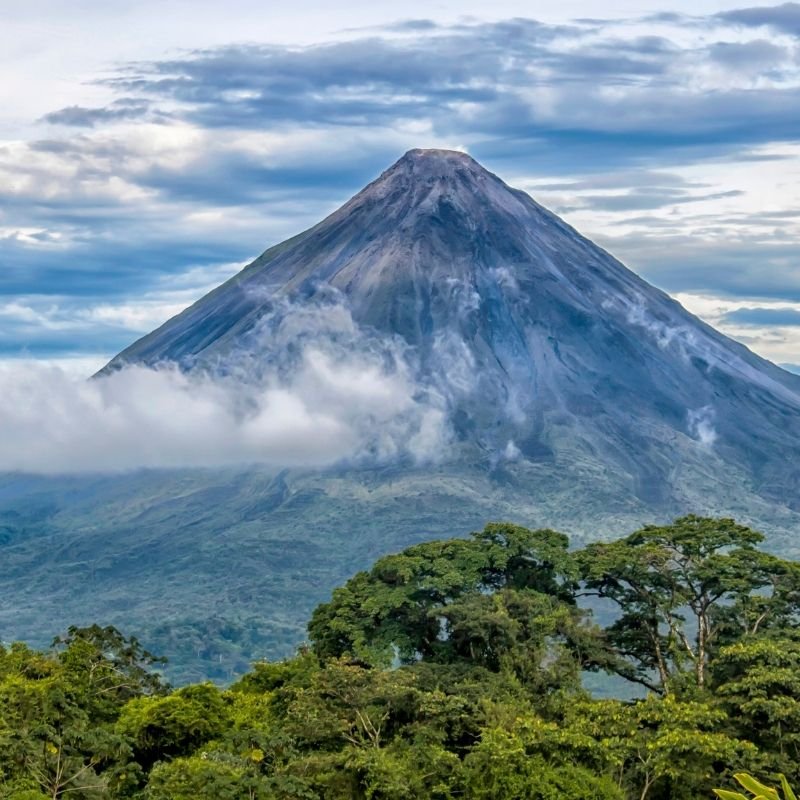
Arenal Volcano from the distance
The Arenal Volcano has been known, not only because of its perfect conic shape and the long lasting legend of its last eruptive period, but also because of its magnificent rainforests, its fantastic hot springs, and a breathtaking array of different activities for all ages and possibilities.
Please read on to find out all you want to know about the Arenal Volcano Region.
Last Eruptive Period of the Arenal Volcano
The Arenal Volcano used to be tremendously active, up until October 2010, and famous for its photoshopped fire on the sides. This incredible eruptive period created the original travel industry of the Arenal Volcano Region and its nearby town la Fortuna.
Before tourism arrived in 1988, the area was a prosperous beef and dairy cattle region. However even if it was very prosperous, it was very isolated, and quite remote.
When tourism started in the country, La Fortuna (the nearest town to the Arenal Volcano) was a tiny village with gravel roads. There was access to it thanks to the electric company and the Arenal Lake hydroelectric dam. Wherever there is a dam, there is a good road to it. That is almost a law on the infamous Costa Rican roads. It actually used to be that if there was a good road, there was a dam somewhere!
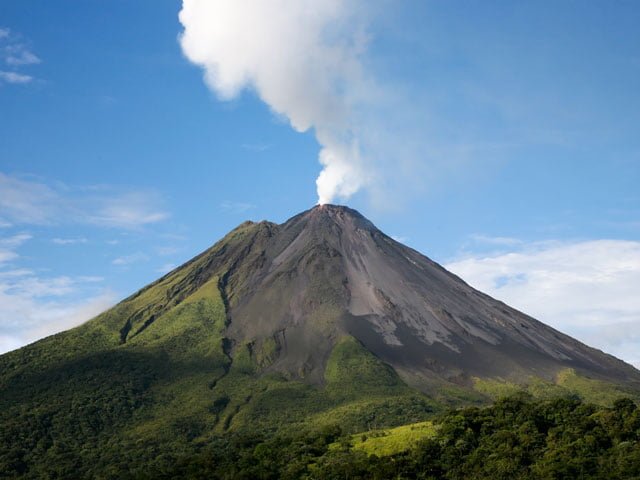
Arenal Volcano
So, anyway, La Fortuna was this small, untouched Arenal Volcano village that lied in the right place (thanks to its position, the violent eruptions of the Arenal Volcano never touched it) and had one old wooden hotel and one little four-table restaurant. As the Arenal Volcano was erupting an average of an explosion every twenty minutes, people began coming to see it. One day trips from San José to see the Arenal Volcano. The Arenal Volcano tours lasted about 12–14 hours. And it was merely, “Go, sit on a rock, wait until the Arenal Volcano erupts, and go back to San José.” That was it.
But then, one day, another restaurant opened and a hotel opened in La Fortuna near the Arenal Volcano, and little by little, the cattle farmers of the area began to turn their pastures into hotels and tourist attractions.
Little by little, but actually quite fast, the region of Arenal near the Arenal Volcano is filled with all sorts of activities, shaded by the thrill of a possible Arenal Volcano eruption at any time. And when it happened, tourists stopped doing whatever they were doing—waiting on a platform to go zip-lining, walking on a rainforest trail, or soaking in hot springs near the Arenal Volcano. Everyone would simply look up and be in awe of the power of nature in the perfect cone of the erupting Arenal Volcano.
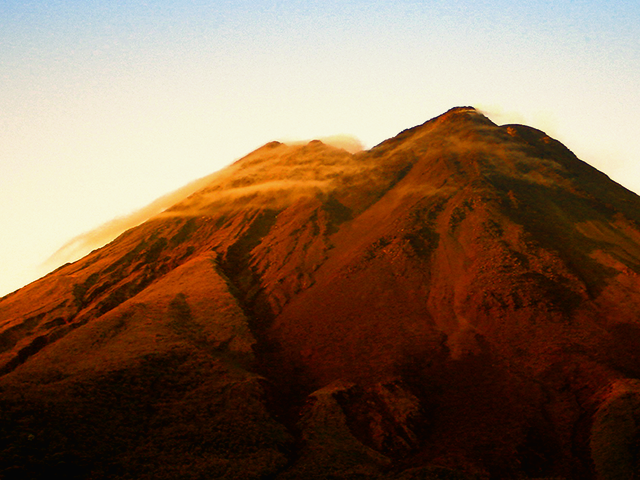
Arenal Volcano 2004
Until one day in October 2010, the Arenal Volcano stopped. One last eruption, and that was it. It fell asleep. And it can be dormant for a few months or hundreds of years near La Fortuna. There is no way to know. But then, you simply had to stop and look around. Here we were; the main attraction was gone. However, the area itself around the Arenal Volcano and La Fortuna has turned into one of the most fantastic places in Costa Rica!
Once the eruptions ended
While everyone was thinking of what to do while the Arenal Volcano erupted, the inhabitants of La Fortuna, near the Arenal Volcano, created this amazing natural adventure park with everything from extreme to soothing!
In the Arenal Volcano and La Fortuna areas, you can find:
Hot Springs: At least five very attractive projects, from heavenly calmed to party, noise, and water slides.
Ziplines: If all the trees in the area were cut, there would be an enormous amount of entangled cables all over the place, as there are at least ten different canopy tours, from mild to extreme.
Rafting, from class III to class V.
Waterfall Rappelling or Canyoning: There are at least three different projects, all of them thrilling, safe, and in primary forests.
Horseback: This is an area of cowboys; horseback riding is like breathing!
Hanging Bridges: At least two projects with several high, wide, and safe hanging bridges in the canopy of the forest
Organic Touristic Farms: With an abundance of products in super fertile soils, the organic farms or the Arenal area are almost a compulsory visit if you want to see the cultural side of the region.
Spas: By dozens! Almost in every hotel and some in La Fortuna, this is one of the gifts of the area.
Rainforest Hikes: Also everywhere! The rainforest at Arenal is one of the most diverse in the country, and there are several protected primary forests.
Bird Watching: In the zone of Arenal, there are over 340 species of birds, from super colorful like the Passerine’s Tanager or the Keel-billed Toucan to the bizarre call of the Oropendola Montezuma.
Wildlife Sighting River Floating Tours Some of the rivers in the area have fantastic wildlife sightings and gorgeous landscapes. Worth the day if you are into mild, easy adventures.
Arenal Waterfall: the most beautiful and pristine waterfall in the midst of a primary rainforest. You have to go down hundreds of steps (and go back up to exit!) but the view and swimming in its pond are absolutely worth it!
There are many more activities to do in the area; the list is almost infinite! From paddle boarding and wind surfing in the lake to rainforest aerial trams and river tubing to pineapple and chocolate tours… However, we are listing some of the most popular.
Check them out with our travel consultants! It is truly an infinite and vigorous region!
This was published first at:
Saenz, O. (2024, April 5). Arenal Volcano. Tavo Leon – Customized Tours. https://tavoleon.com/arenal-volcano/
To see wildlife in Manuel Antonio, Costa Rica, sometimes is just a matter of looking out and up from wherever you are staying. This region is extremely rich in monkeys, sloths and birds sightings.
But yes, we get it. Which are the best wildlife tours in Manuel Antonio? And why is it much better to take an expertly guided tour than to go on your own?
Experience the Wonders of Costa Rica’s Wildlife with an Expert Guide
Manuel Antonio and its surrounding areas in Costa Rica boast some of the most diverse wildlife and breathtaking natural landscapes in Central America. From sloths lazily clinging to trees to troops of energetic squirrel monkeys, you never know what amazing animals you might encounter here.
To maximize your chances of wildlife sightings and fully appreciate these complex ecosystems, the expert naturalist guides at Epic Adventures are the way to go.
Prime Optical Gear in a Manuel Antonio Rainforest Safari
Unlike attempting to explore Manuel Antonio’s national park or the remote Corcovado rainforest on your own, our professional guides have extensive knowledge of the local habitats and animal behaviors. They know exactly when and where to search for elusive creatures like basilisks, iguanas or some mammals, or how to safely approach vibrant toucans perched high above.
Even after dark, our guides can expertly navigate night hikes, spotting unique nocturnal species like kinkajous and owls that you’d likely miss without trained assistance.
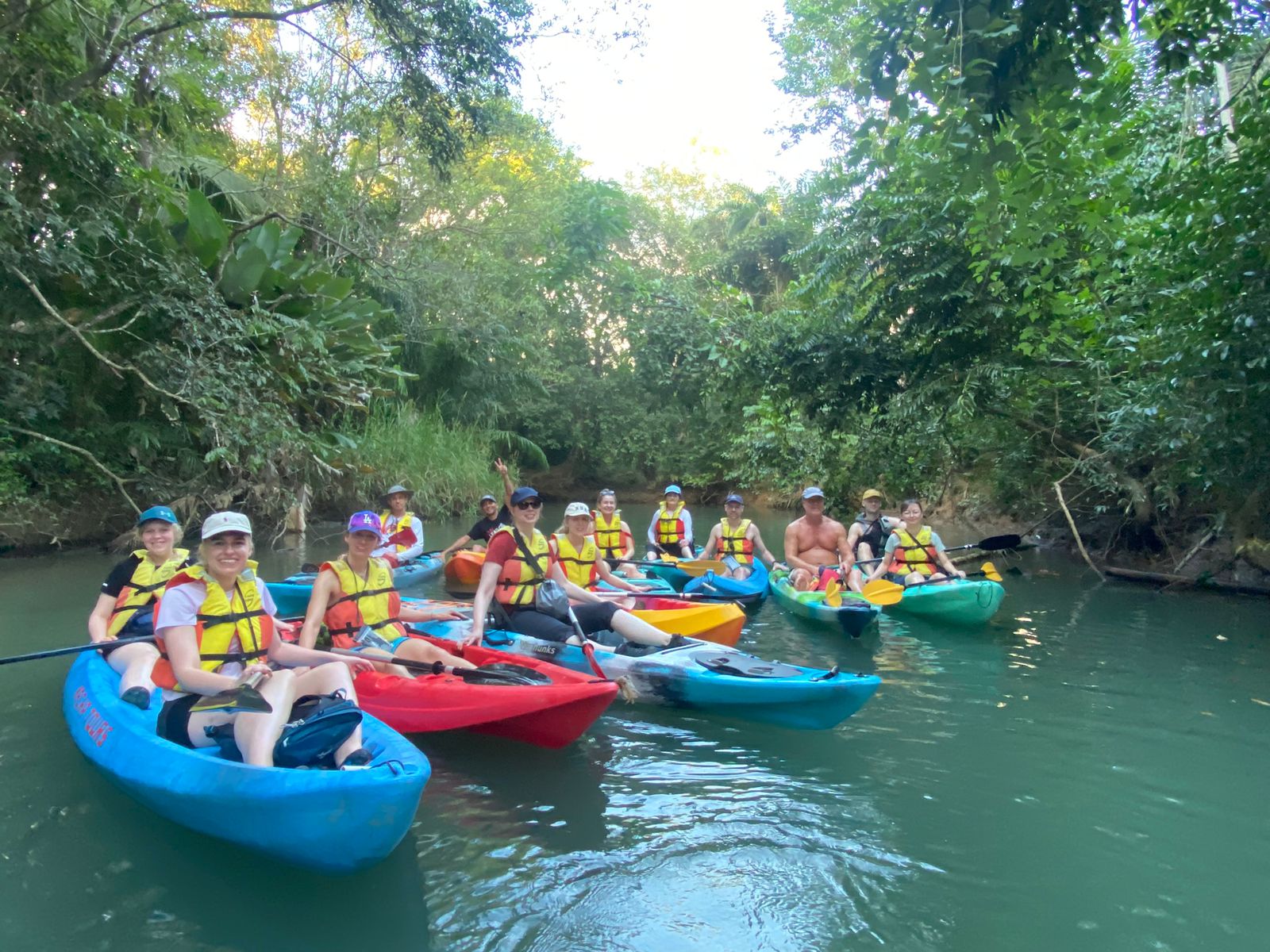
In Damas Mangroves, Epic Adventures guides will quietly paddle you through the estuaries for up-close viewing of crocodiles, herons, sloths, and monkeys. At thundering Nauyaca Waterfalls, they’ll reveal the best and safest areas to observe vibrant butterflies and exotic birds. With the aid of spotting scopes and binoculars, our guides ensure you don’t miss a thing, providing fascinating commentary all the while.
Which are the best wildlife spotting tours in Manuel Antonio?
Rainmaker Nature Reserve is a top wildlife spotting tour in Manuel Antonio. During this private reserve tour, trained naturalist guides can help you observe several sorts of animals and a most majestic rainfores from Rainmaker’s trails and bridges.
With their knowledge, guides maximize your chances of wildlife sightings in Manuel Antonio on this tour.
The Manuel Antonio National Park tour is ideal for wildlife spotting in Manuel Antonio.
This guided hike through lush forest and along pristine beaches provides opportunities to see monkeys like white-faced capuchins, squirrel monkeys, and howler monkeys.
A guided jungle safari in Manuel Antonio
With an expert guide to point out hard-to-find species, you’re sure to see incredible wildlife in Manuel Antonio on this tour.
For an incredible wildlife experience from Manuel Antonio, Corcovado National Park’s day tour is ideal for wildlife spotting. This guided tour takes you to Corcovado by boat and comfortable AC vehicle.
Corcovado National Park
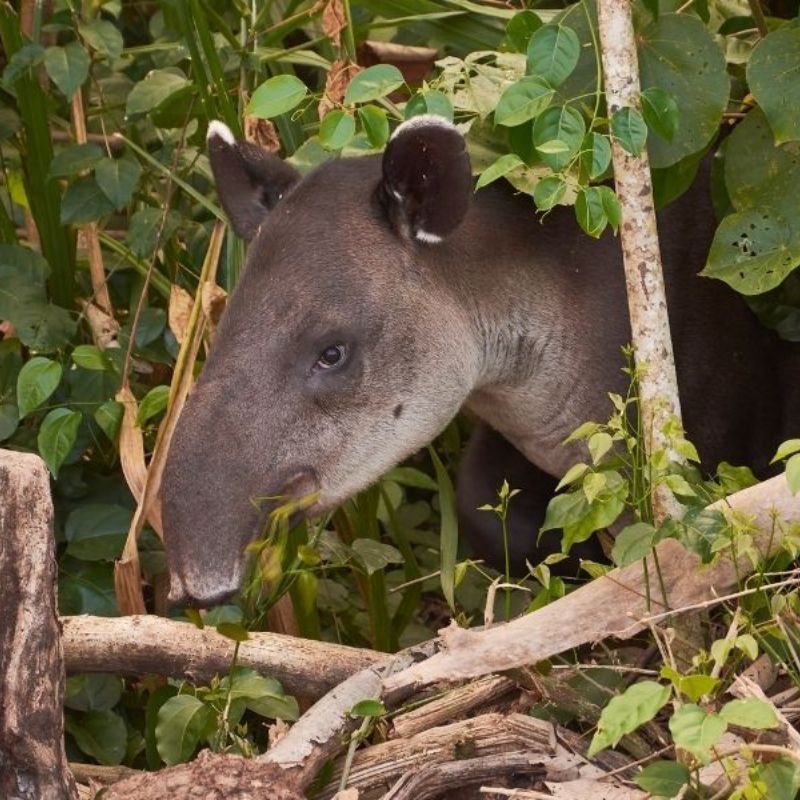
Though only a day, Corcovado is home to all four monkey species, Baird’s tapirs, peccaries, endangered jaguars, and over 400 bird species. With a full day of hiking guided by expert naturalists, you have an excellent opportunity to see amazing wildlife in Corcovado’s stunning surroundings, without needing to stay overnight. This day trip maximizes your chances of wildlife sightings from Manuel Antonio.
The Damas Island Estuary boat tour provides unique wildlife spotting in Manuel Antonio. With an experienced captain and guide, you’ll get extremely close to incredible wildlife in Manuel Antonio’s coastal estuaries.
Don’t just walk by yourself through these awe-inspiring wild places – experience them to the fullest with the expertise of Epic Adventures naturalists! From family tours to personalized adventures, we provide memories to last a lifetime. Let us show you the incredible wildlife Manuel Antonio has to offer!
It’s a moment in the ear of a wave that we interpret as music, it’s a piece of decoration that catches our eye that can only cover a point at a time. If an artist does very well, it becomes a collectible item. Useless and purposeless.
And yet! And yet, millions are paid for pieces of art by this or that artist. Art is a symbol of status, a way to show that I can afford the price of having an “original work” hanging on the wall.
Isn’t it fascinating?
Art serves no purpose and yet it is expensive. And a sign of culture, sensibility and knowledge. “Cultured people” are supposed to like art… Aren’t they?
Why such a useless set of items continue to thrive amongst the worst of times? Haven’t you wondered? I have done it since I started painting!
Why does it fascinate us?
Furthermore, why do I continue to create art, whether people buy it or not?
It’s a question I have always asked myself seriously. I asked the question when my art was hidden in my house, and when I saw people in awe at it, I am asking this question as I am writing this… Why does creativity fascinate us? What is it about art expression that touches us so deeply?
Right at this moment, I am asking myself: Why do I write… if those who read me already know it and those I would like to talk to aren’t interested? Why do I keep on writing, as useless as it is?
And even worst! Why do I paint? As costly as it is! Even though I try hard, I don’t see its purpose in the daily life.
I mean, I do art, a totally disposable endeavor. And yet… There hasn’t been a day in the past nine years when painting hasn’t felt as needed as breathing.
It’s inexplicable, indescribable. There’s nothing in time/space that compares to it, and yet we have all experienced it at some point. Even if you’re not an “official artist” (I’m not an “official” artist because I don’t have a degree from an academy or university, mind you!). You have felt it, if only a little, in the playful rhythm of a song or in the look of a photograph that caught your eye.
Why… Oh! Why? I may have an explanation!
Art is the purest communication of Mystery with the human Spirit.
No one can describe it, no one can encapsulate it. And every artist knows deep down in their heart, against the resistance of their ego, that they have little or nothing to do with their work. It simply passes through the silence of our hands, our fingers, our bodies, and explodes into millions of pieces that we will never even begin to grasp.
No one knows the range of influence their presence has on the planet. Yet, the bull of Altamira has been winking at us for thousands of years without needing anything from its artist.
I repeat: No one knows the range of influence their presence has on the planet.
We know about some, from Plato to Mozart. The names are never important. In fact, the human behind the artist never is. What is transcendent is always the message.
The essential thing about art is its communication with the ineffable. (For those who don’t know what “ineffable” means, it’s a lovely Sunday word to describe what cannot even be imagined.)
Art speaks to your Spirit directly. And most of the time, you have no idea what it’s saying, but it changes you from within, leaving you amazed, touched, and marveling. The sublime and the grotesque alike.
It communicates through time and space. It’s not something the artist can capture. It’s there, despite numbers and statistics, despite wars and terror, despite the brutal boredom of comfort. It’s there, speaking to us through Beethoven and Metallica, through Kandinsky and the Greek who polished the Venus de Milo.
It was there in every dancing step of Isadora Duncan, all disappeared into the mist of time, and unexpectedly we will find it on the common platform of all mortals. In the infinitesimal instant of a chord or a spoken word that moves something, that creates a stir. Or joy, or whatever!
It’s there, through anyone who carries their passion as a banner and allows themselves to be in a state of permanent wonder.
It’s there.
Like Everything always is. Speaking to us.
It spreads like ivy and covers everything with wonders.
In the end, artists are like children who love to play endlessly. , and maybe, just maybe, we are just messengers of Another Voice, reminding everyone the absolute importance of having fun!
Content writing is a key aspect of the online success of any company or business. In Costa Rica, where competition in the digital market is increasing, it is even more important to have a solid content writing strategy.
Monkeys in Manuel Antonio are among the most fascinating and captivating creatures we encounter on our tours. There are four kinds of monkeys in Manuel Antonio National Park. These primates are not only a must-see for tourists, but they also help keep the park’s ecosystem healthy.
White-Faced Capuchin Monkey | Manuel Antonio Monkeys
The four monkey species in Manuel Antonio National Park are the White-faced Capuchin, the Mantled Howler Monkey, the spider monkey, and the Central American Squirrel Monkey. Each species has unique characteristics and behavior patterns that make them fascinating to observe.
In this post you will find:
[ez-toc]
Where are the monkeys in Manuel Antonio?
You can see monkeys in Manuel Antonio almost everywhere. Particularly on the road to the National Park and in the forests that surround the hotels and AirBnBs on Espadilla Beach, as well as on the paths and beaches of Manuel Antonio National Park.
The White-faced Capuchin Monkey
The White-faced Capuchin Monkey is one of the most intelligent monkeys found in Central and South America. These monkeys are highly social and form groups of up to 20 individuals. They are omnivorous and eat a wide variety of foods, including fruits, insects, small animals, and even carrion. They are also known for their use of tools, such as using rocks to crack open nuts.
White-Faced Capuchin Monkey | Monkeys in Manuel Antonio
One of the most interesting aspects of the White-faced Capuchin Monkey’s behavior is their use of vocalizations. They have a wide range of calls that are used to communicate with each other, including alarm calls, food calls, and contact calls. Their vocalizations are so complex that researchers have identified over 40 different calls used by these monkeys.
They are frequently seen looking for food near where visitors to Manuel Antonio National Park stay, as well as around the area’s restaurants and hotels.
The Mantled Howler Monkey
The Mantled Howler Monkey is another species found in Manuel Antonio National Park. As the name suggests, these monkeys are known for their loud and distinctive vocalizations, which can be heard up to three miles away. The howling is used to communicate with other members of the group and to establish territorial boundaries.
Howler Monkey | Monkeys in Manuel Antonio
Unlike the White-faced Capuchin Monkey, the Mantled Howler Monkey is primarily a folivore, which means they primarily eat leaves. They have a specialized digestive system that allows them to break down tough cellulose found in leaves. They also occasionally eat fruit and insects, but leaves make up the majority of their diet.
Central American Squirrel Monkey
The Central American Squirrel Monkey is the smallest monkey found in Manuel Antonio National Park. They are highly social and live in groups of up to 100 individuals. These monkeys are diurnal, which means they are active during the day, and their diet primarily consists of fruit and insects.
Central American Squirrel Monkey | Monkeys in Manuel Antonio
The sunbathing behavior of the Central American squirrel monkey is also well-known. These monkeys will spread out their arms and legs to absorb the warmth of the sun, and some researchers suggest that this behavior may be used to reduce the risk of vitamin D deficiency.
Spider Monkeys
These primates are known for their long, slender arms and prehensile tails, which they use to move through the forest canopy with incredible agility. Spider monkeys are primarily frugivores, meaning they primarily eat fruit. They have an important role in seed dispersal, as they eat fruit and then spread the seeds throughout the forest, helping to maintain the park’s biodiversity.
Spider Monkey | Monkeys in Manuel Antonio
Spider monkeys are also highly social and live in groups of up to 35 individuals. Unfortunately, like the other monkey species in the park, they too are facing threats from human activity. It’s important for visitors to respect the monkeys’ space and avoid feeding them, as this can lead to aggressive behavior and health problems. Overall, spider monkeys are an important part of Manuel Antonio National Park’s ecosystem, and they are a very interesting species to watch.
The role of monkeys in Manuel Antonio
In addition to their fascinating behavior and characteristics, monkeys play an essential role in the ecosystem of Manuel Antonio National Park. As seed dispersers, monkeys help to maintain the balance of the forest ecosystem.
When monkeys eat fruit, they disperse seeds throughout the forest, allowing new plants to grow in areas that may not have had them before. This helps keep the forest’s diversity and makes sure that different kinds of plants and animals can live and grow.
Challenges of monkeys in Manuel Antonio
However, the presence of humans in the park has created some challenges for the monkeys. As visitors to the park have increased over the years, so have incidents of human-monkey interactions. Feeding monkeys is strictly prohibited in the park, as it can create a dependency on humans and lead to aggressive behavior towards visitors. It can also be bad for the monkeys’ health because they might get used to eating things that aren’t part of their natural diet.
To help protect the monkeys in Manuel Antonio National Park, it’s essential that visitors adhere to the park’s rules and regulations. This includes not feeding the monkeys, staying a safe distance away from them, and disposing of all trash properly to avoid attracting the monkeys to areas frequented by humans.
To Sum It Up
The White-faced Capuchin, the Mantled Howler Monkey, Spider Monkeys, and the Central American Squirrel Monkey each have unique characteristics and play a critical role in maintaining the balance of the forest ecosystem. When you see them in the wild, respect them, don’t get too close, do not feed them, and if you happen to be underneath them: keep your mouth closed.
If you want to see the monkeys in Manuel Antonio, or sloths and many other creatures, contact us, and we’ll make it happen!
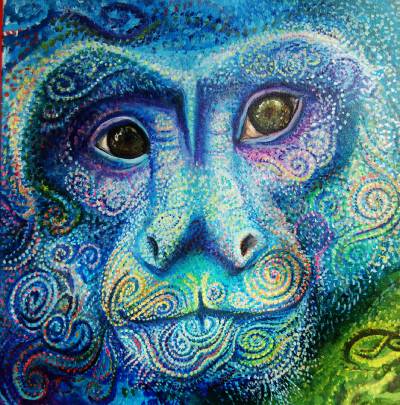
Monkey dreaming he is god, god dreaming he is a monkey? I don’t think we can ever know the answer, beyond the experience we perceive from one corner of consciousness or another.
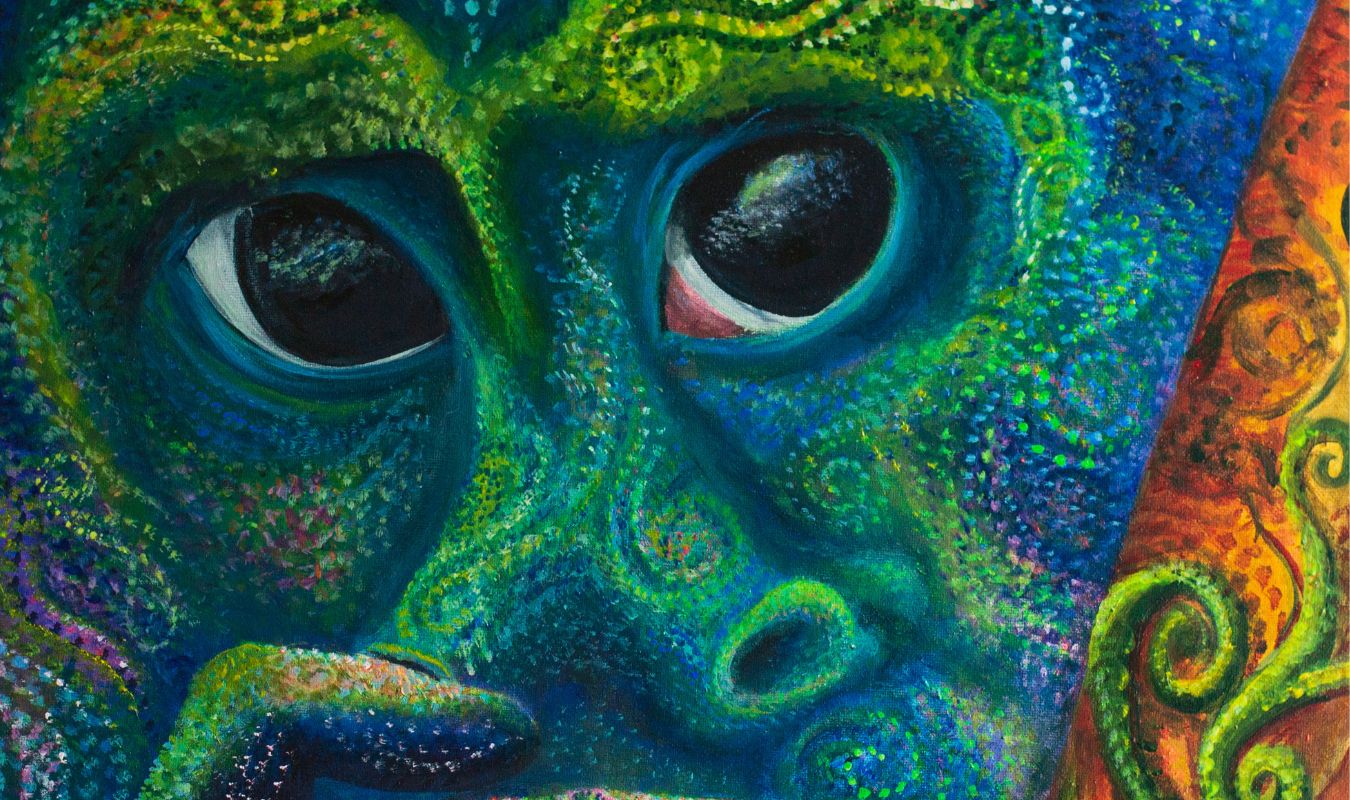
Stoned Ape – Private Collection.
I have the good fortune to live next to a tropical cloud forest in Monteverde, Costa Rica. And probably the capuchin monkeys in the area are my most constant visitors.
I love to see them, and from time to time, voluntarily or involuntarily, I have given them fruit. And then they come back and back.
I was watching them at length today. On the one hand, from the inevitable painter, and on the other, from the philosopher who seeks in her nervous and small gaze the answers to the only two important questions. “What am I, and what is God?”
Am I a monkey who dreams that I am God? Or a god, dreaming he is a monkey?
The issue here is that I pay too much homage to Sapiens, this definition in which we are half monkeys and half gods and with which we console all mysteries.
Sapiens is that right? Like a canteen in the middle of an intersection. I can choose the monkey, or I can choose the god. Perhaps that is the only prerogative of our tiny, powerful free will.
If I choose the monkey, I enter the persistent illusion of time.
If I play the god,…Oh! That is not a decision. Because “god” is, in the end, the fucking mystery of consciousness.
The only decision I make – more often than I would like to admit – is to forget about the All that I am in order to concentrate on the small expression of a monkey. The god is not perceptual. What analyzes this is the monkey, always looking for eternities where they have not been lost.
I say “god” like saying “papaya” or “feather” or “number two”. It is a term to define the mystery that I do not understand, but that is there, inevitable. I am aware. There is no way around this tough question. I exist and perceive.
The point is that I perceive even the thought that says I perceive.
The thing is, I don’t know if I ever think anything, or feel anything from the mystery of my consciousness.
I see this… Who? Who sees?
The body… The body sees. No, the body transmits the image. I perceive it… What the fuck is “I”?
Like a drunk-drinking unconsciousness, I perceive myself asking questions, searching for truths. (I only describe here how the consciousness moves). A la Amelie, I can’t help but imagine Ipathia, Plato, Jesus, and Buddha discovering this same truth: “I have no idea what I am. No idea.”
And I have no idea what I’m communicating with. No idea. I call him god. As if saying papaya. The name does not matter. I communicate with something, always. Inevitably. I perceive and communicate.
Do I perceive that I am communicating? I don’t know either.
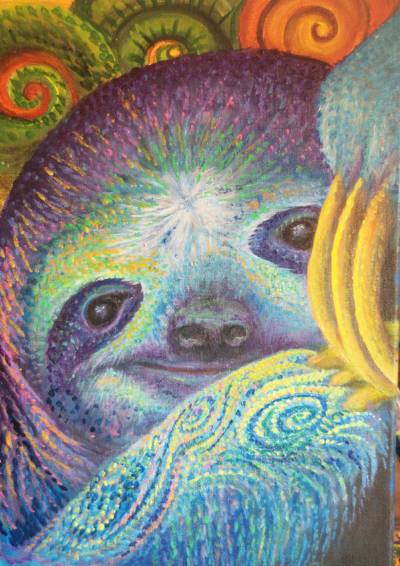
Sloth – for sale
I cannot define true communication. It connects, it is an experience. Communication is also illusory.
Beyond communication there is something. There is everything. Beyond is the mystery. The “other” that exists and I don’t know what it is.
Do I feel reverence for that “other”? I do not know. The CM tells me that feeling it is obvious. But how can I revere what I don’t know what it is?
Yesterday I read something that touched me: The skeptic reads all the books and still doubts everything. The religious person reads only one book and does not question anything.
It makes me laugh, because I can put myself in both perspectives, and both are right.
If I think of the Course (that “only” book that came to answer almost all my real questions), the experience of the Course – which is not in itself a pyrotechnic moment – is a permanent solution, a true “washing of sins”, incomprehensible and ineffable.
The permanent result of the forgiveness that defines A Course in Miracles makes it somehow impossible to doubt it. The ineffable experience that you are at Peace with something with which at some point you had a dramatic and violent war? That one? I can neither deny it nor doubt it. I live it, permanently.
First of all, whether “The Other” exists or not, whether we are a biochemical phenomenon separated from everything (even writing it sounds SO primitive to me), whether we are, at last, a monkey dreaming that he is god, the experience of living is present. Incomprehensibly.
And it doesn’t matter in the slightest, who dreams up this pod because Pink Floyd, in their Pulse concert in 1994, is absolutely awesome. 🙂